
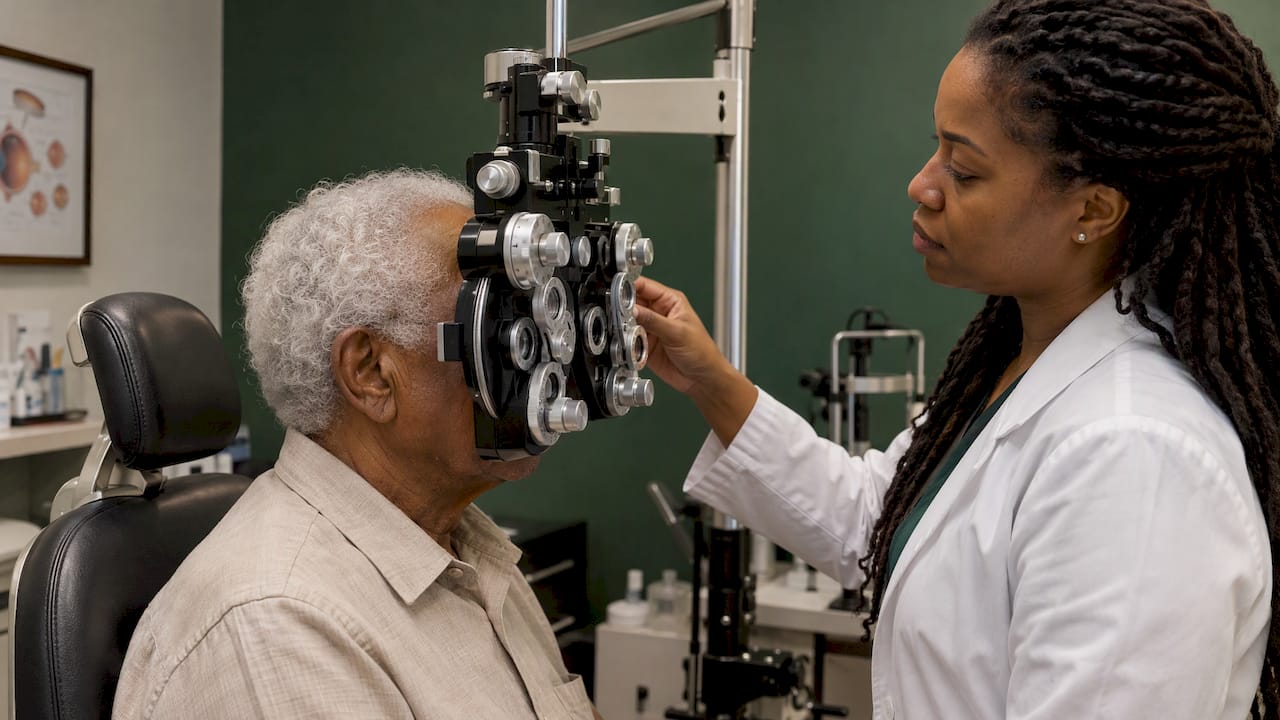

Original Medicare does not pay for routine eye exams or for glasses and contacts, so retirees who want that coverage have to add it. The most common ways are a Medicare Advantage plan with vision benefits, a separate dental and vision policy, or a retiree plan from a former employer. Which one fits depends on your eye care habits, your doctors and your budget. Our Medicare Insurance Planners® walk through that comparison with you at no charge to you.
TL;DR
- Original Medicare does not cover routine eye exams for eyeglasses or contact lenses. You pay those costs yourself.
- It does cover certain medical eye care: glaucoma screening for people at higher risk, diabetic eye exams, and one pair of standard glasses or contacts after cataract surgery.
- Many Medicare Advantage plans add a routine exam and an eyewear allowance. A separate dental and vision policy is the other main route.
- Medigap (Medicare Supplement) plans generally do not add vision, so vision has to come from somewhere else.
- Compare the exam copay, the frame and contact allowances, how often you can use them, and whether your eye doctor is in the network.
Table of Contents
- What Original Medicare covers for your eyes
- Four ways retirees get routine vision coverage
- What to compare before you choose
- Vision and the rest of your Medicare decision
- How we help you sort it out
- FAQ
- Sources
What Original Medicare covers for your eyes
Medicare draws a line between eye care for a medical problem and eye care for seeing better with lenses. The first can be covered. The second generally is not.
Per the CMS fact sheet on Medicare vision services, Part B can pay for eye services that are reasonable and necessary to diagnose or treat an illness or injury. Three situations come up most often for retirees:
- Glaucoma screening. Covered once a year if you have a higher risk: diabetes, a family history of glaucoma, you are Black or African American and 50 or older, or you are Hispanic or Latino and 65 or older.
- Diabetic eye exams. NCOA notes that Part B covers an annual diabetic retinopathy exam for people with diabetes, plus certain tests for macular degeneration.
- Cataract surgery. Medicare.gov says Part B covers one pair of standard-frame eyeglasses, or one set of contact lenses, after each cataract surgery that implants an intraocular lens. You pay 20% of the Medicare-approved amount after the Part B deductible, you pay for any upgrades, and the eyewear must come from a Medicare-participating supplier.
The Part B deductible is $283 for 2026, according to NCOA. That figure is reset each year, so check the amount for the year you are in.
What it leaves out
Medicare.gov’s list of services Original Medicare does not cover includes eye exams for prescription eyeglasses. The same page says Medicare Advantage plans may offer extra benefits such as certain vision, hearing and dental services. In practice, the yearly checkup where your optometrist updates your prescription, and the glasses or contacts that follow, are yours to pay for unless you add coverage.
That is why people searching for “vision insurance after retirement” are usually solving one problem: how to pay for a routine exam and new lenses once the employer plan that covered them is gone.

Four ways retirees get routine vision coverage
1. A Medicare Advantage plan with vision benefits
For most people turning 65, this is the simplest route because vision sits inside the same plan as your doctor and hospital coverage. KFF’s 2026 Medicare Advantage analysis found that virtually all plans still provide extra benefits such as vision, hearing and dental.
The CMS fact sheet describes what an Advantage vision benefit may include: routine eye exams, eyeglass frames once every 24 months, and one pair of lenses or contact lenses once every 24 months. Real plans vary. One retiree plan comparison from a school district’s Medicare Advantage option shows a $0 routine eye exam and a $100 plan-paid allowance for glasses or contacts every 12 months. That is one plan’s design, not a standard, which is why the benefit page of each plan matters more than the headline “includes vision.”
You can read more about how these plans work on our Medicare Advantage plans page and in our Medicare Advantage plans comparison.

2. A separate dental and vision policy
If you keep Original Medicare, you can add a stand-alone vision or combined dental and vision policy. These are sold by private carriers, and you pay a monthly premium for a set exam copay and an allowance toward frames or contacts. This route suits retirees who want to keep Original Medicare with a Medigap plan, since Medicare.gov’s Medigap guide says Medigap policies generally do not cover vision or dental care, hearing aids or glasses.
We offer these through our dental and vision insurance page, and our vision insurance overview explains how they sit alongside Medicare.
3. A retiree plan from a former employer or a public agency
Some employers, school systems and public agencies let retirees keep or buy vision coverage after they leave. The terms differ widely. Nevada’s PEBP Medicare guide shows one pattern: Medicare-eligible retirees move to Medicare plans through an exchange, and voluntary vision coverage is available at the retiree’s own premium cost. California’s 2026 state vision handbook says retirees there have 60 days from retirement to enroll in COBRA or a retiree vision plan.
The lesson applies to any employer: ask your benefits office, before your last day, whether vision continues and what the enrollment window is. Missing it can mean going without.
4. Community and charitable eye care
If your income is limited, NCOA’s guide lists several programs that offer free or low-cost exams and glasses to qualifying older adults, including EyeCare America and Lions Club vision programs. Eligibility rules apply, so confirm them with each program.
What to compare before you choose
Two plans can both say “vision included” and be very different in use. These are the points that change what you pay:
| What to check | Why it matters |
|---|---|
| Exam copay | Ranges from $0 to a set copay per visit, and may be limited to once a year |
| Frame allowance | A fixed amount toward frames; you pay the difference above it |
| Contact lens allowance | Often separate from, or instead of, the frame allowance |
| Lens coverage | Single-vision is usually covered; progressives and coatings may carry extra copays |
| Frequency | Every 12 or every 24 months for lenses and frames |
| Network | Your eye doctor and the optical shop must be in-network for the full benefit |
| Premium | A monthly cost for stand-alone plans; may be folded into a Medicare Advantage premium |
The California handbook captures the frame rule well: you choose your frames, and you pay the difference if they cost more than the allowance. That is true of most plans, so a $150 allowance is not a $150 pair of glasses if you pick designer frames.
A worked example
Say you wear progressive lenses, need a new pair every two years and have an exam each year. Count what you would spend without coverage: two exams, one pair of glasses. Then count what each option costs you in a year: premiums, exam copays and the portion of the glasses above the allowance. The option with the lower total for your own habits is the better one, and a plan with a generous allowance but a doctor you do not use is worth less to you than a modest plan with the doctor you already see.
If you have diabetes or a family history of glaucoma, also note that Medicare already pays for part of those exams. Your extra coverage mainly needs to handle the routine side.
Vision and the rest of your Medicare decision
Vision is rarely the only factor in choosing a plan. Doctors, prescriptions and hospital costs usually weigh more. Three points keep the decision in proportion:
- Plans change every year. KFF reports the average beneficiary has 32 Medicare Advantage plans with drug coverage to choose from in 2026, two fewer than in 2025, and more enrollees face plan terminations. A vision benefit you like this year can be different next year, which is why a yearly review matters. Our guide to checking Medicare vision coverage each year covers what to look for.
- Timing matters. If you are retiring before 65, our page on health insurance before Medicare explains the bridge. Once you are turning 65, our Medicare enrollment timeline shows when each window opens.
- Medigap and vision are separate decisions. If you prefer Original Medicare with a Medicare Supplement plan, plan on a separate vision policy.
How we help you sort it out
Sorting out vision coverage means reading benefit summaries from several carriers and matching them to your eye doctor, your prescriptions and your budget. At Green Insurance Agency, our certified Medicare Insurance Planners® do that comparison with you, one on one, across plan types: Medicare Advantage, Supplement, Part D, and dental and vision. Our consultations and support are free to you.
We work with seniors and families in Orange Park, Fleming Island, Jacksonville and across Clay County, and we stay available after you enroll for claims, appeals and annual coverage reviews. You can see everything we do on our services page.

If you want to know what your vision options look like before you decide, book a Medicare consultation with us.
Our view on vision coverage
Vision is the benefit people notice last and miss first. Most people turning 65 are told that Medicare covers their eyes, and it does, but only the medical side. The first time they find out about the gap is at the optical counter.
We believe the answer is education first. Before we talk about a plan, we ask when you last had an eye exam, whether you wear progressives, and which eye doctor you trust. Those answers decide whether a Medicare Advantage allowance, a separate vision policy or a retiree plan is the better fit.
We also believe in coming back every year. Benefits change, networks change, and your eyes change. An annual review keeps vision, drug and doctor coverage lined up, so a benefit you counted on does not quietly disappear.
Zach
FAQ
Does Medicare cover eyeglasses after retirement?
Original Medicare does not cover routine glasses or contacts. The exception is one pair of standard-frame glasses or one set of contacts after cataract surgery with an intraocular lens, where you pay 20% after the Part B deductible. Many Medicare Advantage plans add a routine eyewear allowance.
Does a Medigap plan include vision?
Generally not. Medicare.gov states that Medigap policies usually do not cover vision care, dental care, hearing aids or glasses. Retirees with a Medigap plan typically add a separate vision or dental and vision policy.
Can I keep my employer’s vision plan after I retire?
Sometimes. Some employers and public agencies let retirees continue or buy vision coverage, usually at the retiree’s own cost and often within a limited enrollment window after leaving. Ask your benefits office before your last day.
Is vision insurance worth it for retirees?
It depends on how often you use eye care. Add up what you would pay for exams and glasses in a year, then compare that with the premium, copays and allowance of each option. Retirees who need new lenses regularly often come out ahead.
Sources
- Eye exams (routine) | Medicare.gov
- MLN907165 Medicare Vision Services | CMS
- Eyeglasses coverage | Medicare.gov
- What’s not covered | Medicare.gov
- Does Medicare Cover Vision for Seniors? | NCOA
- Choosing a Medigap Policy | Medicare.gov
- Medicare Advantage 2026 Spotlight | KFF
- Retiree Plan Options Comparison 2026
- PEBP and Medicare Guide, Plan Year 2026
- 2026 Vision Handbook | CalHR