
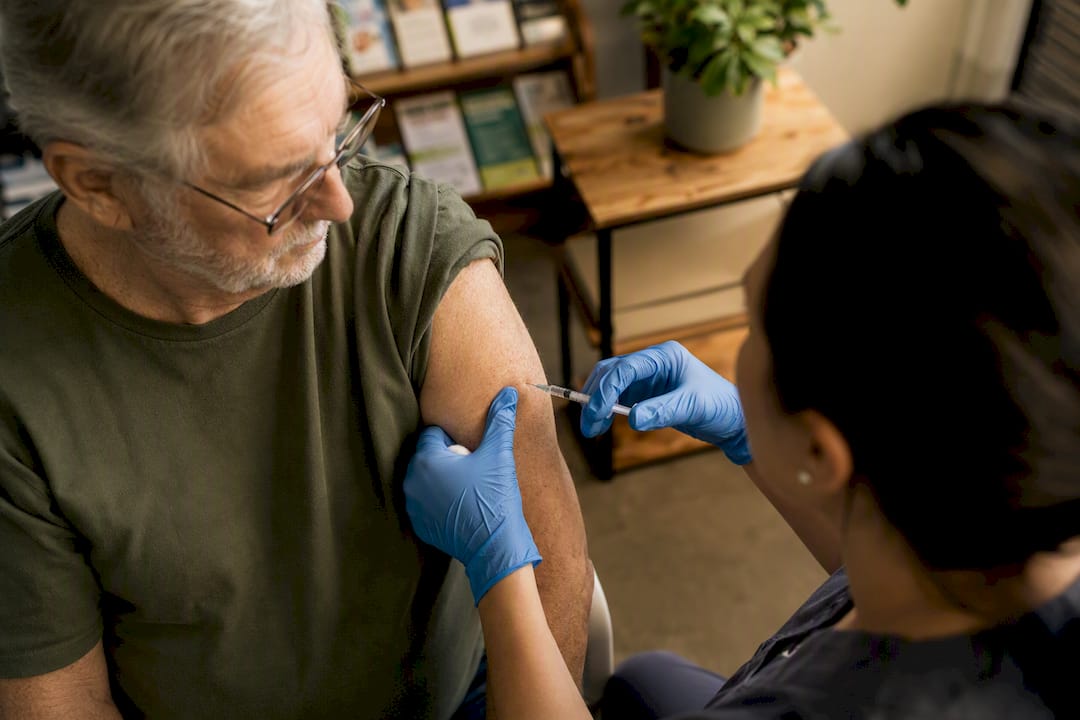
If you have Medicare Part D, your shingles vaccine costs $0. That’s the short answer, and it holds for the vast majority of Medicare beneficiaries in 2026. Original Medicare, meaning Part A and Part B, does not cover the shingles shot at all. Coverage runs exclusively through Part D, and the reason you’re not paying a copay traces back to a specific law: the Inflation Reduction Act, which eliminated cost-sharing for adult vaccines recommended by the Advisory Committee on Immunization Practices (ACIP).
Here’s what that means in practice:
- Have Part D? You pay $0 for the SHINGRIX vaccine at an in-network pharmacy or provider.
- Only have Part A and B? You’re responsible for the full cost, often more than $180 per dose, times two.
- Not sure if you have Part D? Check your card or call your plan before your appointment.
The policy behind the $0 price tag: The Inflation Reduction Act requires Part D plans to cover ACIP-recommended vaccines with no deductible, no copay, and no coinsurance, starting in 2023 and continuing today.
Key Takeaways
Medicare Part D covers the shingles vaccine at $0 out-of-pocket for most beneficiaries because the Inflation Reduction Act eliminated cost-sharing for ACIP-recommended adult vaccines.
| Point | Details |
|---|---|
| Part D, not Part B, covers it | Original Medicare (Parts A and B) doesn’t cover shingles vaccination at all. |
| $0 cost is the rule, not a promo | The Inflation Reduction Act eliminated Part D cost-sharing for ACIP-recommended vaccines starting in 2023. |
| Pharmacies bill more reliably | Chain and independent pharmacies typically bill Part D directly, unlike some doctor’s offices. |
| No Part D means full price | Without Part D, expect to pay over $180 per dose, or explore Medicaid, VA, or manufacturer assistance. |
| Confirm your specific plan | Greenins helps Northeast Florida beneficiaries verify Part D formulary status and avoid billing surprises. |
This article is general information, not a substitute for advice from a qualified doctor. Consult a qualified healthcare professional about your own circumstances before acting on anything here.
Table of Contents
- Shingles Vaccine Medicare Coverage: Part D vs. Part A and B
- Why You Pay $0: The Inflation Reduction Act’s Role
- Where Should You Get the Shingles Vaccine?
- Who Should Get the Shingles Vaccine, and When?
- No Part D Coverage? Here’s What to Do
- Avoiding Billing Mistakes: Advice From Certified Medicare Planners
- Comparing Part D Plans for Shingles Vaccine Coverage
- Does Medicare Advantage Cover Shingles Vaccine Differently?
- What to Do If You’re Vaccinated Out of Network
- Had Shingles Before? Does That Change Your Coverage?
- What the Data Actually Tells Beneficiaries to Do
- Get Help Confirming Your Part D Shingles Vaccine Coverage
- Sources
Shingles Vaccine Medicare Coverage: Part D vs. Part A and B
Original Medicare splits vaccine coverage in a way that trips up a lot of people. Part B pays for a narrow list: flu shots, pneumococcal vaccines, hepatitis B for at risk patients, and COVID-19 vaccines. That’s essentially it. Anything outside that list, including shingles, falls to Part D, the prescription drug benefit.
This isn’t an oversight. Vaccines that Part B doesn’t cover get pushed to Part D by federal rule, and Part D plans are legally required to cover every vaccine ACIP recommends for adults. Medicare that Part D covers the shingles vaccine specifically because ACIP recommends it and Part B doesn’t already cover it.
A few things worth knowing about how this plays out:
- Part D coverage applies whether you get the vaccine at a pharmacy, a doctor’s office, or a clinic, as long as the provider is in your plan’s network.
- The CDC and ACIP set the clinical recommendation; CMS translates that into a coverage mandate for Part D plans.
- Standalone Part D plans and the drug portion of Medicare Advantage plans both follow this same rule.
If someone tells you Medicare Part B covers your shingles shot, they’re wrong, and it’s a mistake that catches even experienced beneficiaries off guard.
Why You Pay $0: The Inflation Reduction Act’s Role
The number that matters here is $0, and it’s not a marketing figure. Medicare.gov states plainly that Part D plans generally can’t charge a deductible, copay, or coinsurance for ACIP-recommended adult vaccines, shingles included.
Before 2023, plans could apply cost-sharing that sometimes ran $50 or more per dose. The Inflation Reduction Act wiped that out entirely for Part D-covered vaccines. That’s the mechanism, not a temporary promotion.
A few caveats keep this from being absolute:
- If a vaccine is brand new and hasn’t been added to your plan’s formulary yet, you or your provider may need to request a formulary exception, a documented process CMS outlines for exactly this situation.
- Going to an out-of-network provider can still trigger upfront charges, even though the vaccine itself is technically covered.
- Broader Part D reforms, including the closure of the old coverage gap and a new annual out-of-pocket cap, have made overall drug spending more predictable for seniors managing multiple prescriptions, according to Healthcare. Neither change affects your $0 shingles vaccine cost, but they matter if you’re also filling other prescriptions.
Where Should You Get the Shingles Vaccine?
Pharmacies are almost always your easiest option, and there’s a practical reason for that. Chain pharmacies and most independent ones are set up to bill Part D directly at the point of sale. You walk in, show your Medicare and plan cards, get the shot, and walk out having paid nothing.
Doctor’s offices are a different story. Many physician practices aren’t configured to bill Part D the same way pharmacies are. Some will ask you to pay upfront and file for reimbursement yourself, which is slower and adds a step you don’t need. AARP has flagged this billing gap as one of the more common sources of confusion and unexpected charges.
Here’s a short checklist before you go:
- Look up your plan’s vaccine coverage tool or formulary online, or call the number on your plan card.
- Ask specifically whether the pharmacy or office bills Part D directly rather than requiring you to pay first.
- Bring your Medicare card and your Part D plan card to the appointment.
- Keep any receipt or paperwork you’re given, just in case.
Pro Tip: Call the pharmacy the same day as your appointment and ask, “Do you bill Medicare Part D directly for SHINGRIX, or will I need to pay and submit a claim?” That one question avoids most billing surprises.
Who Should Get the Shingles Vaccine, and When?
ACIP recommends the shingles vaccine for adults age 50 and older, regardless of whether they remember having chickenpox. The CDC’s guidance also covers younger adults 19 and up who are immunocompromised, since shingles risk rises sharply with age and weakened immunity.
The vaccine is given in two doses:
- Dose one, then dose two given two to six months later.
- If you’re immunocompromised, the second dose can come as early as one month after the first.
- Mild soreness, fatigue, or a low fever for a day or two afterward is common and expected.
You don’t need a prescription to get vaccinated, but it’s worth mentioning any recent illness or immune-related condition to whoever administers the shot. If you’re currently sick or have a specific contraindication, ask your clinician whether to wait.
No Part D Coverage? Here’s What to Do
Without Part D, you’re paying retail, and retail for SHINGRIX runs over $180 per dose according to NCOA, meaning two doses can top $360 out of pocket. That’s real money, and it’s worth exploring alternatives before you pay full price.
A few paths worth checking:
- Enroll in Part D. Open enrollment runs annually, but certain life events trigger special enrollment periods worth asking about.
- Medicaid, if you qualify, often covers adult vaccines, though rules vary by state, so check with your state Medicaid office directly.
- VA benefits, if you’re a veteran, frequently include the shingles vaccine at no cost through VA health facilities.
- Manufacturer assistance. The SHINGRIX cost and coverage tool lets you check eligibility for programs that reduce or eliminate the cost if you’re uninsured or underinsured.
Avoiding Billing Mistakes: Advice From Certified Medicare Planners
Most shingles vaccine billing problems come down to three things: the provider isn’t set up to bill Part D directly, your plan hasn’t yet added the vaccine to its formulary, or someone typed your plan information wrong at check-in. Any one of these can leave you holding a bill you shouldn’t owe.
Certified Medicare planners generally recommend this sequence:
- Confirm with the provider, before your appointment, that they bill Part D directly rather than asking for upfront payment.
- Get written or emailed confirmation of your coverage from your plan if there’s any doubt.
- Photograph or save every receipt and claim form, even if you’re told it’s covered.
- If you’re charged, call your plan’s customer service and record the representative’s name and reference number.
That last step matters more than people realize. Documenting the reference number when you call about a billing dispute speeds up resolution considerably compared to calling back with no paper trail. If you want a second set of eyes on your specific Part D plan before you go in for your shot, Greenins works with Medicare beneficiaries across Northeast Florida to review exactly this kind of coverage question.
Comparing Part D Plans for Shingles Vaccine Coverage
Every standalone Part D plan and every Medicare Advantage plan with drug coverage is required to cover the shingles vaccine at $0 cost-sharing, since that’s a federal mandate tied to ACIP’s recommendation, not a feature individual insurers choose to offer. So the real comparison question isn’t “does this plan cover it,” it’s “how easily will this plan let me use that coverage.”
A few things actually differ from plan to plan:
- Network breadth. A plan with a wide pharmacy network gives you more places to walk in and get vaccinated without hassle. A narrower network might limit you to specific chains.
- Formulary timing. Some plans add newly recommended vaccines to their formulary faster than others. If a vaccine update is new, ask your plan directly whether it’s listed yet, or whether you’d need a formulary exception.
- Customer service responsiveness. This sounds minor until you’re the one on hold trying to sort out a billing error. Plans vary widely here, and reviews often reflect it.
When comparing plans during open enrollment, use Medicare’s official Plan Finder tool to check whether SHINGRIX is listed on a specific plan’s formulary, then call the plan directly to confirm which local pharmacies bill it without upfront payment. Don’t assume a low monthly premium means smooth vaccine access. The premium and the administrative experience are two separate things, and the second one is where most complaints originate.
Does Medicare Advantage Cover Shingles Vaccine Differently?
Medicare Advantage plans that include drug coverage, often called MA-PD plans, follow the same federal $0 cost-sharing rule as standalone Part D plans. The vaccine mandate comes from the same source: ACIP’s recommendation combined with the Inflation Reduction Act’s cost-sharing elimination. A Medicare Advantage enrollee shouldn’t pay more than a standalone Part D enrollee for the identical vaccine.
Where things can genuinely differ is network structure. Medicare Advantage plans, especially HMOs, sometimes restrict which pharmacies or providers count as in-network more tightly than standalone Part D plans do. Getting vaccinated outside that network can trigger a bill even though the vaccine itself is covered.
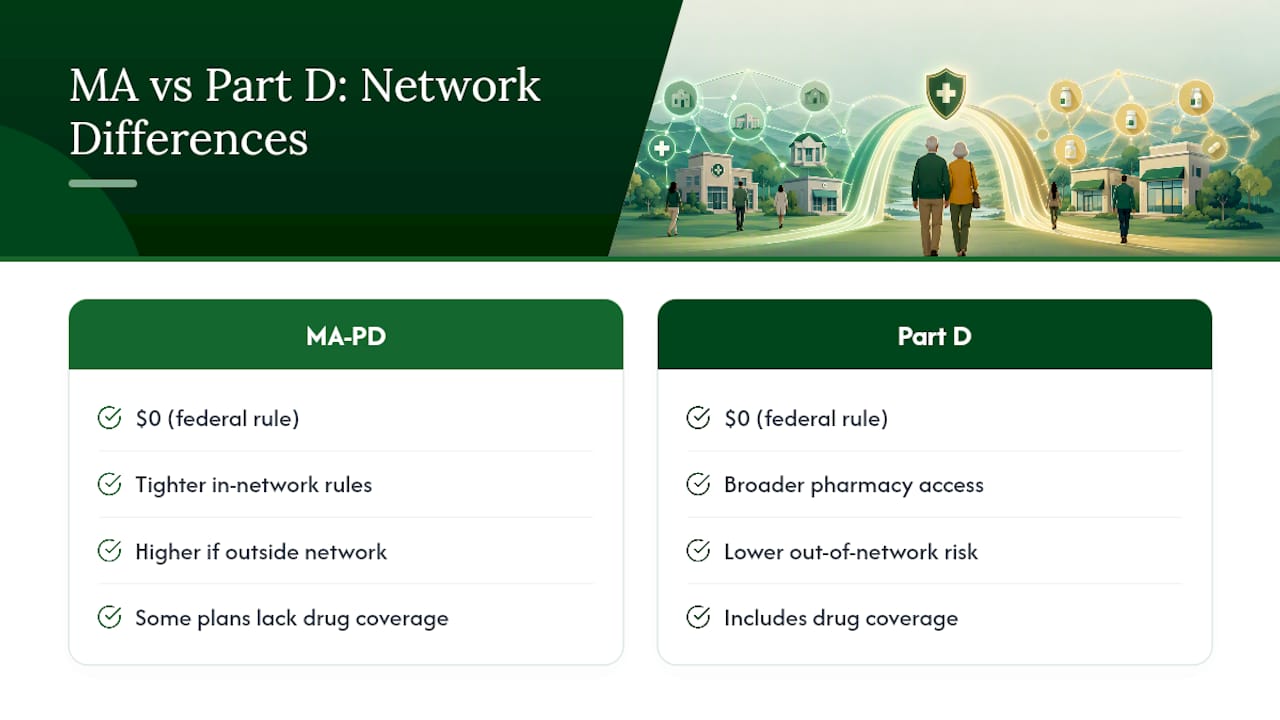
A small number of Medicare Advantage plans without drug coverage exist, though they’re increasingly rare. If you’re on one of these, you’d need a standalone Part D plan to get shingles vaccine coverage at all, since your medical benefit alone won’t include it.
Before your appointment, it’s worth a two-minute call to your Medicare Advantage plan to confirm the pharmacy or clinic you’re using is in-network for prescription benefits, not just medical benefits. Those two networks aren’t always identical, and that gap catches people off guard more often than any pricing issue does.
What to Do If You’re Vaccinated Out of Network
If you get vaccinated somewhere outside your plan’s network, or if a provider charges you upfront instead of billing Part D directly, you’re not out of options. You can file a claim for reimbursement, though the process takes a bit more legwork than point-of-sale billing.
Start by requesting an itemized receipt from the provider that shows the vaccine name, the date of service, the amount charged, and the provider’s information. Your Part D plan will need these details to process a paper claim. Most plans have a direct member reimbursement form available on their website or by request through customer service.
Submit the claim promptly, since plans typically set a filing deadline, often within a calendar year of the service date. Keep a copy of everything you send, and note the date you mailed or submitted it. If weeks pass without a response, call your plan and reference your original submission date.
This is exactly the kind of situation where the earlier advice about documenting call reference numbers pays off. If your reimbursement claim gets denied and you believe it shouldn’t have been, you have the right to file a formal appeal with your Part D plan, and a documented paper trail makes that appeal far stronger.
Had Shingles Before? Does That Change Your Coverage?
Having had shingles in the past doesn’t change your Medicare coverage for the vaccine at all. ACIP recommends vaccination for adults 50 and older regardless of prior shingles history, since a past episode doesn’t prevent future recurrence. Coverage rules under Part D apply the same way whether this is your first shot or you’re vaccinating after a prior bout.
Clinically, most guidance suggests waiting until any active shingles rash has cleared before getting vaccinated, but that’s a medical timing question, not a coverage one. Your Part D plan doesn’t ask about vaccination history or prior diagnosis before covering the shot.
The one thing worth double checking is whether you’d previously received an older shingles vaccine, Zostavax, which is no longer available in the United States. If that’s the case, ACIP guidance still recommends getting the current two-dose SHINGRIX series, and Part D coverage applies the same $0 cost-sharing rule regardless of what vaccine you received years earlier.
What the Data Actually Tells Beneficiaries to Do
The conventional advice on this topic stops at “Medicare covers it,” and that’s where most articles leave you. It’s technically true and practically useless, because the real risk isn’t whether coverage exists on paper. It’s whether the specific pharmacy counter or doctor’s office you walk into that day is set up to bill it correctly.
I’d argue the formulary exception process and the reimbursement claim process matter more than most guides admit, precisely because they’re the backup plans nobody reads about until they need one. Most beneficiaries never touch either process. The ones who do usually wish they’d known about it beforehand instead of scrambling after getting an unexpected bill.
If there’s one thing to prioritize, it’s the five minute phone call before your appointment, not after. Confirming direct billing with your pharmacy takes less time than most hold-music intros, and it’s the single step that prevents nearly every billing complaint in this space.
— Zach
Get Help Confirming Your Part D Shingles Vaccine Coverage
Reading about Part D rules is one thing. Knowing whether your specific plan covers the shingles vaccine at $0, with no formulary surprises, is another. Greenins gives Medicare beneficiaries in Orange Park, Fleming Island, and the greater Jacksonville area a direct answer to that question, without the hold music or the guesswork of a call center script.
Green Insurance Agency’s certified Medicare Insurance Planners® review your current Part D plan, confirm your formulary status, and flag any network gaps before they turn into a surprise bill. If you’re turning 65, comparing plans during open enrollment, or just want someone to double check your coverage before your next shingles vaccine appointment, schedule a consultation with Greenins and get a straight answer from someone who reviews these plans every day.