


Medicare set the maximum Part D deductible at $615 for 2026, and CMS has already confirmed a $700 cap for 2027. Some plans charge less, and a few charge nothing at all. Either way, the deductible is only the first hurdle: once you clear it, coinsurance kicks in, and a separate annual out-of-pocket limit caps what you’ll ever pay for covered drugs in a given year.
TL;DR:
- Most Medicare Part D plans will charge a deductible up to $615 in 2026, but some plans may have lower or zero deductibles, and vaccines are always exempt.
- After meeting the deductible, enrollees pay 25% coinsurance until their true out-of-pocket spending reaches $2,100 in 2026, which triggers catastrophic coverage with $0 costs for covered drugs.
- The deductible amount varies by plan, with 96% of standalone plans charging some deductible in 2026, and 78% charging the full standard amount; always verify plan details through the Evidence of Coverage and Annual Notice of Change.
- Only certain payments count toward the out-of-pocket threshold, including coinsurance, copays, subsidies like Extra Help, and manufacturer discounts, but premiums and non-formulary drug payments do not.
- Filing expensive medications early in the year can help meet the deductible faster, and beneficiaries should review their plan during Open Enrollment to optimize their drug coverage and costs.
Table of Contents
- How the Three Part D Coverage Phases Work
- The 2026 and 2027 Numbers You Need to Know
- Does Every Part D Plan Charge the Same Deductible?
- What Counts Toward Your Deductible, and What Doesn’t
- How to Check Your Own Plan’s Deductible
- Practical Ways to Lower Your Part D Costs
- When It Pays to Have a Second Set of Eyes on Your Plan
- Get a Free Part D Deductible and Formulary Review
- Sources
- FAQ
How the Three Part D Coverage Phases Work
Your Part D plan year moves through three distinct phases, and where you land determines what you pay at the pharmacy counter.
- Deductible phase. You pay the full negotiated price for your prescriptions until you hit your plan’s deductible amount. Some drugs may be exempt, which we’ll cover below.
- Initial coverage phase. Once the deductible is met, you typically pay 25% coinsurance under the standard benefit design, while your plan covers the rest. Every dollar you spend here, along with certain other payments, counts toward your true out-of-pocket (TrOOP) total.
- Catastrophic coverage. Once your TrOOP spending hits the annual threshold, you owe $0 for covered Part D drugs for the rest of the year.
If you remember the old “donut hole,” forget it. That mid-year coverage gap was phased out under the Part D redesign, and beneficiaries now move directly from initial coverage into catastrophic protection once they cross the out-of-pocket threshold. There’s no longer a stretch where you pay a higher share simply because you spent enough.
The 2026 and 2027 Numbers You Need to Know
The 2026 maximum Part D deductible is $615. The federal maximum jumps to $700 in 2027. That’s a real increase, and it comes on top of a rising out-of-pocket threshold: $2,100 in 2026, climbing to $2,400 in 2027.
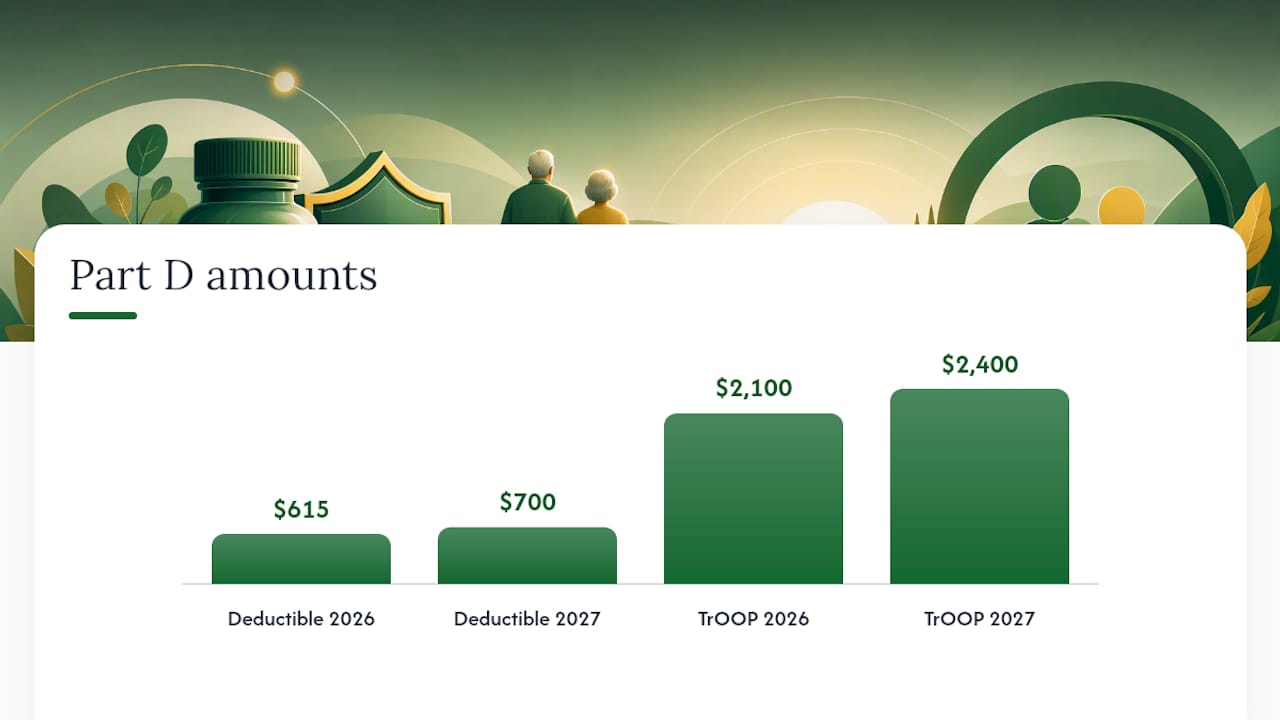
Hitting that out-of-pocket threshold is the number that actually matters for your budget. Once your TrOOP spending reaches it, catastrophic coverage takes over and covered drug costs drop to zero for the remainder of the plan year. Everything before that point, including your deductible, is money you’re on the hook for unless a subsidy or plan design change reduces it.
Premiums sit outside this deductible math but still affect your total spending. Medicare publishes a national base premium each year, and higher earners pay an income-related monthly adjustment (IRMAA) on top of their plan premium. None of that changes your deductible, but it does change what leaves your bank account every month regardless of how many prescriptions you fill.
Does Every Part D Plan Charge the Same Deductible?
No. CMS sets a ceiling, not a fixed rate. Plans can charge the full $615 for 2026, a partial amount, or nothing at all.
- Most enrollees still pay something. KFF’s 2026 analysis found that 96% of standalone Prescription Drug Plan (PDP) enrollees face a deductible, with 78% paying the full standard amount. Among Medicare Advantage drug plans (MA-PD), 82% of enrollees are in plans that charge a deductible.
- Some plans exempt specific drug tiers, meaning you could pay a normal copay for a Tier 1 generic or a preferred insulin before you’ve met your deductible at all.
- Vaccines covered under Part D are exempt from the deductible by law, no matter which plan you’re in.
Plan-level rules vary enough that two people with identical drug lists can pay very different amounts in January. Always check your plan’s Evidence of Coverage for the exact tier structure rather than assuming the standard rules apply.
What Counts Toward Your Deductible, and What Doesn’t
Not every dollar you spend counts the same way. Under CMS’s Part D redesign rules, TrOOP tracks your own payments plus certain third-party contributions, such as Extra Help subsidies and manufacturer discounts under the Manufacturer Discount Program that replaced the old Coverage Gap Discount Program. Premiums do not count toward TrOOP, and neither do payments for drugs outside your plan’s formulary.
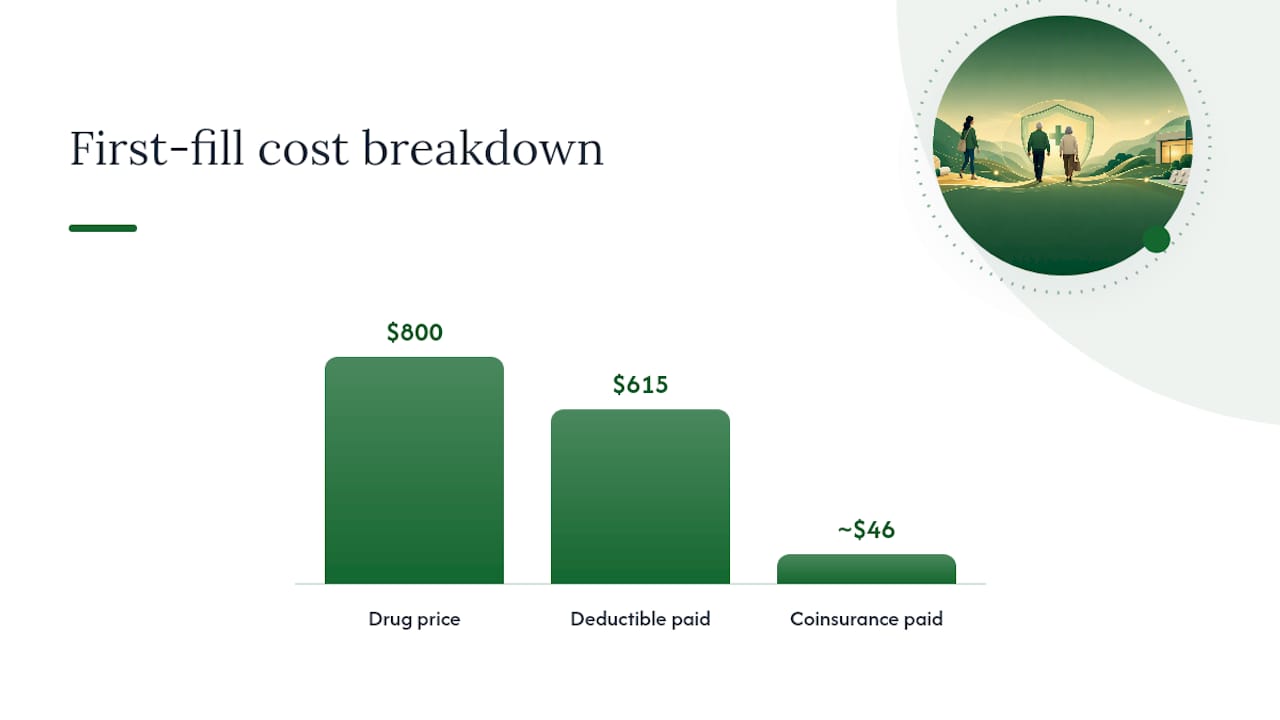
Here’s how a single high-cost fill plays out in practice:
- You fill a Tier 4 specialty drug priced at $800 in January, before meeting any deductible.
- If your plan charges the standard $615 deductible, you pay that full amount on this fill.
- You then owe 25% coinsurance on the remaining $185, or roughly $46, putting your total first-fill cost near $661.
- Every fill after that is coinsurance only, until your TrOOP spending reaches the annual out-of-pocket threshold.
Pro Tip: Fill your most expensive prescription early in the year if you know you’ll need it anyway. Clearing your deductible sooner means the rest of your fills move to coinsurance pricing that much faster.
How to Check Your Own Plan’s Deductible
Your deductible amount isn’t a mystery. It’s printed in two documents you already receive every year.
- Evidence of Coverage (EOC): the master document listing your exact deductible, tier structure, and any exemptions.
- Annual Notice of Change (ANOC): mailed every September, this flags what’s changing for the coming plan year, including deductible increases, formulary shifts, or pharmacy network changes.
Once you have both in hand, three quick steps tell you what you actually need to know: find your deductible amount, check whether your regular medications fall into an exempt tier, and compare plans if the deductible or formulary changes would raise your expected annual spending. Medicare’s Open Enrollment Period, running October 15 through December 7, is your window to switch.
Pro Tip: Don’t just skim the ANOC’s summary page. Formulary tier reshuffling can quietly move a drug you take daily from a cheap tier to an expensive one, even when the deductible itself stays flat.
Practical Ways to Lower Your Part D Costs
Cutting your drug spending usually comes down to matching your plan to your actual prescriptions, not chasing the lowest premium.
- If you take one or two high-cost specialty drugs, a plan with a lower deductible or better tier placement for those drugs often beats a plan with a cheap premium and a full $615 deductible.
- Ask your prescriber about generics or therapeutic substitutes, request 90-day fills through mail order, and use your plan’s preferred pharmacy network, since out-of-network fills often cost more.
- Look into manufacturer patient assistance programs for brand-name drugs without generic equivalents, especially for chronic conditions.
- Check your eligibility for Extra Help, the federal Low-Income Subsidy program. Qualifying beneficiaries can see their deductible eliminated entirely, with copays as low as a few dollars for generics.
- Contact your State Health Insurance Assistance Program (SHIP) or your state Medicaid office for free help applying for Extra Help or checking eligibility.
Extra Help remains the single fastest way to erase a deductible outright, and it’s worth checking before you lock in any plan for the year ahead.
When It Pays to Have a Second Set of Eyes on Your Plan
A certified Medicare Insurance Planner® typically reviews your deductible, formulary fit, pharmacy network, and projected annual out-of-pocket cost together, not in isolation. That matters because a plan that looks cheap on premium alone can still cost more once you factor in tier placement for your actual prescriptions. Green Insurance Agency’s planners also help clients interpret ANOC changes and time enrollment correctly, so a deductible increase doesn’t catch anyone off guard in January.
— Zach
Get a Free Part D Deductible and Formulary Review
Figuring out whether your deductible, tier placement, and pharmacy network actually work together takes more than reading a benefit summary. A free consultation is available that is designed to help Medicare beneficiaries understand their plan’s deductible and formulary fit.

During the review, a certified Medicare Insurance Planner® walks through your current or prospective plan’s deductible, checks your medication list against the formulary, and estimates your total expected out-of-pocket cost for the year, not just the sticker price on the premium. If your ANOC just raised your deductible or shuffled a drug into a pricier tier, that’s exactly the kind of change worth a second opinion before Open Enrollment closes. Schedule your free plan review and find out whether your current Part D plan still fits your prescriptions.
This article is general information, not a substitute for advice from a qualified doctor. Consult a qualified healthcare professional about your own circumstances before acting on anything here.
Sources
- How much does Medicare drug coverage cost? | Medicare
- Medicare Part D Enrollment, Premiums, and Cost Sharing in 2026 | KFF
- Final CY 2025 Part D redesign program instructions — CMS
FAQ
What is the maximum Medicare Part D deductible in 2026?
The maximum allowable deductible for 2026 is $615. Plans may charge less or waive it entirely, but none can charge more.
Do all Medicare Part D plans have deductibles?
No. Most enrollees face some deductible, with 96% of standalone PDP enrollees paying one in 2026, but plenty of plans offer $0 deductibles or exempt certain drug tiers entirely.
Is Medicare Part D free at age 65?
Part D itself isn’t free. You’ll typically owe a monthly premium plus cost-sharing that includes a deductible, unless you qualify for Extra Help, which can eliminate both.