


Whether you can buy a Medigap policy under 65 depends entirely on where you live, not on any federal guarantee. Some states force insurers to sell you at least one plan; others let insurers turn you away or charge whatever they want. The one certainty: at 65, you get a guaranteed six-month enrollment window no matter your state. Start by calling your state insurance department or a local SHIP counselor today.
TL;DR:
- Most states do not require insurers to sell Medigap policies under 65, and protections vary widely, with some states offering no guaranteed-issue rights.
- State rules can exclude conditions like ESRD or ALS from protections, affecting distinct diagnosis categories differently even within the same state.
- Outside the six-month window at age 65, applicants face full underwriting and higher premiums, making early documentation critical.
- Medicare Advantage plans often accept under-65 enrollees without underwriting but can limit future Medigap options if switched later.
- Consulting with local insurance agencies and gathering all eligibility documentation early improves chances of securing Medigap under 65.
Table of Contents
- How Federal and State Rules Interact for Under-65 Medigap Coverage
- Who Qualifies for Medicare Under 65, and How That Shapes Your Medigap Rights
- How Do You Confirm Medigap Availability Where You Live?
- What If Medigap Isn’t Available to You Yet?
- Timing, Underwriting, and What Medigap Actually Costs Under 65
- What Zach Sees in Real Under-65 Medigap Cases
- The Real Problem Isn’t Medigap. It’s the Information Gap
- How Green Insurance Agency Helps You Sort Out Medigap Under 65
- Where to Verify State Rules and Your Options
- Sources
How Federal and State Rules Interact for Under-65 Medigap Coverage
Federal law sets a floor, not a ceiling, and that floor is lower than most people expect. There’s no federal mandate requiring insurers to sell Medigap policies to beneficiaries under 65, which means an insurer in a state with weak protections can legally reject your application, charge you far more than an older applicant, or offer you a stripped-down plan instead of a full one. That gap explains a startling number: a small minority of under-65 traditional Medicare beneficiaries carried Medigap coverage, compared with a larger share of beneficiaries 65 and older, according to Medicare’s own figures.
States fill that gap with wildly different rules. Broadly, they fall into four camps:
- No provisions at all. The insurer decides whether to sell you anything, and can medically underwrite your application like any private health policy.
- Limited offer. Insurers must sell something, but it might be a bare-bones plan rather than the more comprehensive options available to seniors.
- Required single-plan availability. State law forces at least one standardized plan to be sold to under-65 applicants, though insurers can still set the price.
- Broad guaranteed-issue. A handful of states require insurers to offer multiple plan choices at community-rated or near-community-rated pricing, similar to what a 65-year-old gets.
Most states land somewhere in that middle range. KFF’s research found that many states require insurers to issue at least one type of Medigap policy to beneficiaries under 65, but the details matter. Some of those states specifically carve out End-Stage Renal Disease (ESRD) or ALS from their guaranteed-issue protections, meaning a diagnosis that qualifies you for Medicare in the first place can also be the reason an insurer denies you Medigap. Massachusetts, Minnesota, and Wisconsin run their own separate frameworks entirely, with rules that don’t map cleanly onto the standardized plans used elsewhere, according to Medicare’s official Medigap guide.
Who Qualifies for Medicare Under 65, and How That Shapes Your Medigap Rights
Three groups make up nearly everyone under 65 on Medicare, and each one gets treated a little differently once Medigap enters the picture.
- Social Security Disability Insurance (SSDI) recipients. After 24 months of SSDI payments, you’re automatically enrolled in Medicare regardless of age. This is the largest under-65 group, and the one most exposed to state-by-state inconsistency.
- End-Stage Renal Disease (ESRD). Medicare eligibility kicks in based on dialysis or transplant status, often with a shorter waiting period. Several states specifically exclude ESRD patients from their guaranteed-issue Medigap protections, even when they cover other disabilities.
- ALS (amyotrophic lateral sclerosis). Diagnosis triggers immediate Medicare eligibility with no waiting period, and some states treat ALS more favorably than they treat ESRD or general disability.
The pattern worth noticing: states that protect disability-based enrollees don’t always extend the same protection to ESRD or ALS patients, and vice versa. You genuinely cannot assume one diagnosis category gets the same treatment as another, even within the same state.
Medicaid or employer-sponsored retiree coverage changes the calculus significantly. If you’re dual-eligible for Medicaid, it often covers the deductibles and coinsurance Medigap would otherwise handle, which means the urgency to find a Medigap policy drops considerably. Similarly, if you’re still covered under a spouse’s employer plan, that coverage may fill gaps well enough that chasing Medigap under 65 isn’t worth the premium.
Pro Tip: Keep a copy of your Medicare eligibility letter (the one showing your qualifying category, whether SSDI, ESRD, or ALS) in a dedicated file. Insurers and SHIP counselors will ask for it, and digging through old mail under time pressure is the last thing you want during a coverage gap.
How Do You Confirm Medigap Availability Where You Live?
Don’t rely on a general internet search to answer this. State rules change, and generic guides go stale fast. Work through these steps in order:
- Start at Medicare.gov. The Medigap basics and ready-to-buy pages explain the federal baseline and link out to state-specific resources.
- Call your State Health Insurance Assistance Program (SHIP). These counselors work free of charge and know your state’s guaranteed-issue rules cold, including exceptions competitor guides frequently miss.
- Contact your state insurance department directly. Ask specifically whether Medigap insurers must offer plans to under-65 applicants, and whether ESRD or ALS changes that answer.
- Call individual insurers and ask about guaranteed-issue periods. Some carriers voluntarily offer under-65 plans even where state law doesn’t require it. You won’t find this by reading regulations. You find it by asking.
- Document every notice that could trigger a guaranteed-issue right, including employer plan termination letters, Medicaid eligibility notices, or Medicare Advantage plan cancellations.
Pro Tip: When you call an insurer, ask them to put their answer in writing, even a simple email. Verbal “yes, we cover that” answers have a way of turning into “actually, no” once the application lands on an underwriter’s desk.
What If Medigap Isn’t Available to You Yet?
Medigap isn’t the only path to filling Original Medicare’s gaps, and for some under-65 beneficiaries it isn’t even the best one right now.
- Medicare Advantage bundles hospital, medical, and often drug coverage into one plan with capped out-of-pocket costs, and many plans accept under-65 enrollees without medical underwriting. The catch: switching later back toward Medigap can trigger full underwriting, and an insurer can deny you or charge a steep premium based on the health conditions that got you on Medicare in the first place.
- Medicaid, if you qualify as dual-eligible, often covers cost-sharing that Medigap would otherwise handle, which can make the Medigap question less urgent.
- Employer or COBRA retiree coverage sometimes coordinates with Medicare well enough to cover gaps temporarily, though COBRA is time-limited and retiree plans vary enormously by employer.
- Stand-alone Part D, dental and vision riders, or high-deductible plan structures can patch specific gaps cheaply while you wait for your guaranteed-issue window at 65.
The core trade-off to weigh: Medicare Advantage often costs less now, but it can quietly close the door on affordable Medigap coverage later.
Timing, Underwriting, and What Medigap Actually Costs Under 65
The six-month Medigap Open Enrollment Period at 65 is the single most valuable window most beneficiaries ever get. It begins the first month you’re 65 and enrolled in Medicare Part B, and during it insurers must sell you any Medigap policy they offer, at their standard rate, with no medical underwriting. Miss it, and you’re back to relying on state law and insurer discretion.
Outside that window, or outside a state guaranteed-issue period, applicants under 65 face full medical underwriting. That means insurers can:
- Deny the application outright based on a pre-existing condition
- Charge a substantially higher premium than they’d charge a 65-year-old with the same health profile
- Limit which standardized plans they’ll offer you at all
According to Medicare’s plan comparison tool, Plan G, Plan N, and high-deductible Plan G are among the commonly available options, though some plans like Plan F and Plan C are not available to new Medicare eligibles on or after January 1, 2020. Premiums for identical plans vary enormously by state and insurer, driven largely by how competitive the guaranteed-issue rules are locally. A state with broad guaranteed-issue tends to have more insurers competing for under-65 business, which pushes rates down; a state with no provisions at all leaves pricing almost entirely to the insurer’s underwriting judgment.
What Zach Sees in Real Under-65 Medigap Cases
As a certified Medicare Insurance Planner®, Zach has walked clients through this exact maze more times than any regulation summary can capture. The recurring pattern: someone qualifies for Medicare through SSDI or ESRD, assumes Medigap works the same way it did for their older relatives, and discovers their state has no requirement at all.
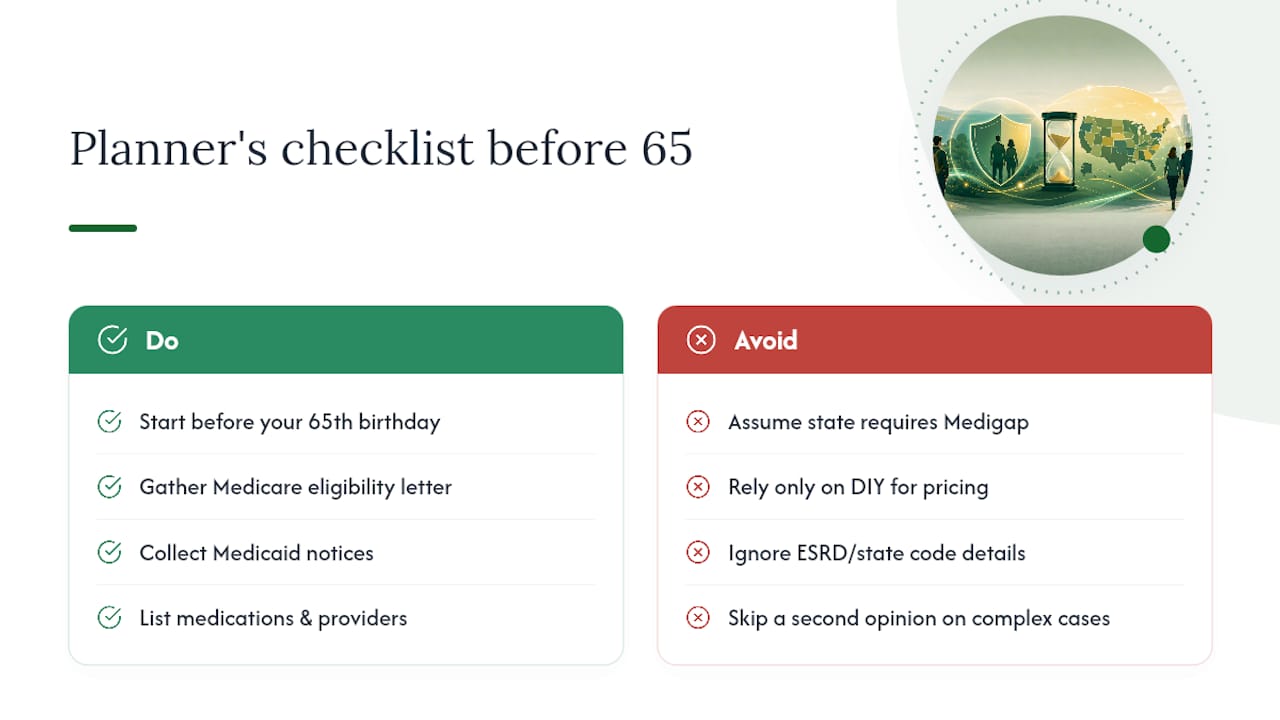
The clients who come out ahead are the ones who start early. Before your 65th birthday, gather your Medicare eligibility letter, any Medicaid notices, proof of employer coverage changes, and a list of medications and providers you want a plan to cover. That paperwork turns a confusing phone call into a five-minute conversation.
DIY research works fine for confirming basic eligibility. It stops working once you’re comparing specific plan pricing across insurers or trying to interpret an ESRD carve-out buried in state code, and that’s when a second set of eyes pays off.
The Real Problem Isn’t Medigap. It’s the Information Gap
Most advice on this topic treats Medigap under 65 like a simple yes-or-no question. It isn’t. The honest answer is “it depends on your state, your diagnosis category, and whether you catch the right window,” and that complexity is exactly why so many eligible people never apply at all, not because they’re ineligible, but because nobody told them which door to knock on.
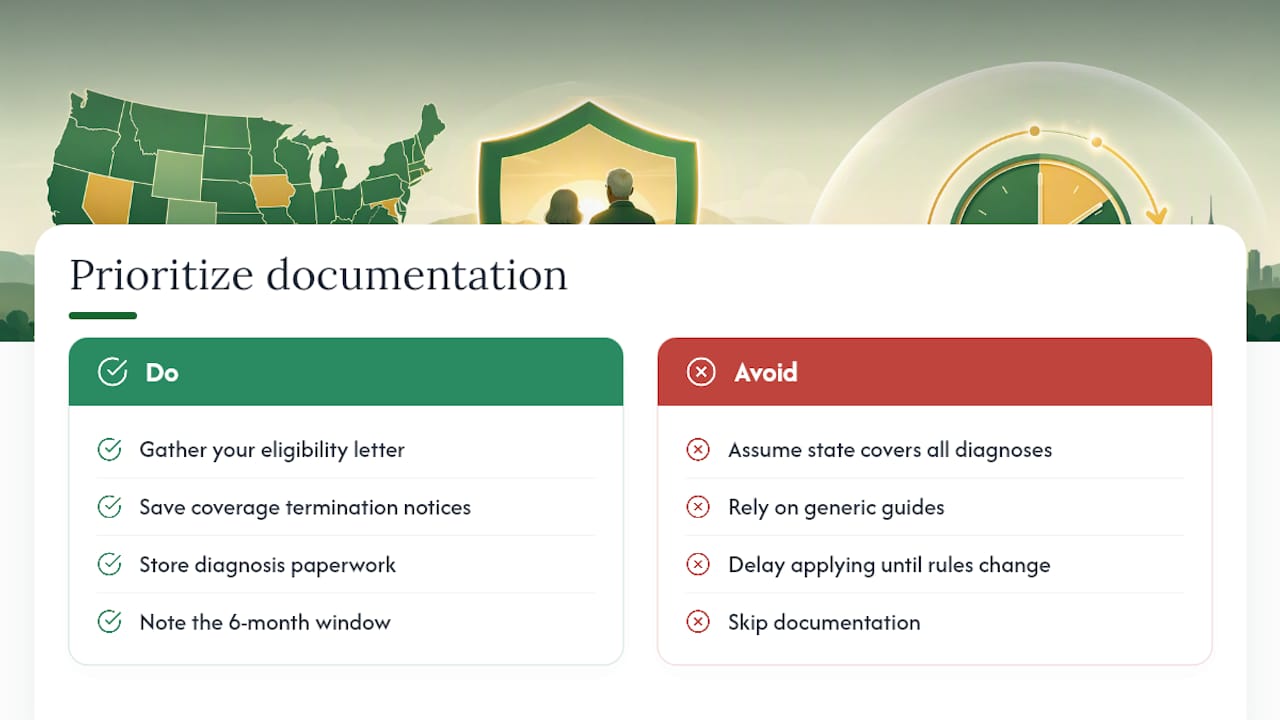
The conventional advice to “just check if your state offers Medigap” undersells how much variation exists even within states that technically have protections. A state can guarantee issue for disability while excluding ESRD entirely, and generic guides rarely spell that out.
If you take one thing from this, prioritize documentation over research. Knowing the theory behind guaranteed-issue rights matters less than having your eligibility letter, coverage termination notices, and diagnosis paperwork ready the moment a window opens. Rules change; paperwork doesn’t wait for you to catch up.
— Zach
How Green Insurance Agency Helps You Sort Out Medigap Under 65
Figuring out whether your state requires insurers to sell you a Medigap plan, and which one, isn’t something you should have to untangle from a government PDF alone. Certified Medicare Insurance Planner® advisors walk you through your specific state’s rules, your eligibility category, and what’s actually available to you right now, at no cost, with ongoing annual reviews so you’re not left to guess again when your situation changes.

Bring your Medicare card, any employer or Medicaid notices you’ve received, and a general sense of your current medications and doctors. That’s usually enough for a consultation to identify your real options and flag any guaranteed-issue window you might be approaching. If you’re under 65 and unsure whether Medigap is even on the table for you, schedule a consultation with Green Insurance Agency and get a straight answer instead of another generic checklist.
Where to Verify State Rules and Your Options
- Medicare for federal rules and timing
- KFF’s analysis of state-by-state Medigap access for pre-existing condition impacts
- Your state insurance department or local SHIP counselor for current, state-specific answers
This article is general information, not a substitute for advice from a qualified financial advisor. Consult a qualified financial professional about your own circumstances before acting on anything here.