


The Medicare annual wellness visit is a preventive, conversation-based benefit that costs you nothing if your provider accepts assignment. It’s built around one goal: catching health risks early and building a plan to manage them. You qualify once you’ve had Medicare Part B for more than 12 months, and you can use it once every 12 months after that.
TL;DR:
- You qualify for a Medicare wellness visit after 12 months of enrollment in Part B and can have one annually for free if billed correctly.
- The visit includes a health risk assessment, medical history review, basic measurements, cognitive screening, and personalized prevention planning; it does not cover a physical exam or diagnostic tests.
- Mention any new symptoms or health concerns before scheduling to prevent unexpected charges, especially for conditions that might require separate diagnostic visits.
- Be aware that addressing new complaints during the visit can trigger separate billing, so ask about billing codes to ensure the visit remains preventive and free.
- After the visit, review your coverage needs based on flagged risks and follow up with a tailored coverage review to ensure your plan covers recommended screenings and treatments.
Table of Contents
- What Does the Medicare Wellness Visit Include?
- Who Qualifies for a Wellness Visit and When?
- How Should You Prepare for Your Wellness Visit?
- Wellness Visit vs. Physical vs. Welcome to Medicare: What’s the Difference?
- What Billing Mistakes Should You Watch For?
- Why Your Wellness Visit Should Shape Your Coverage Decisions
- Turn Your Wellness Visit Results Into a Coverage Plan
- Where to Verify the Official Rules
- Sources
What Does the Medicare Wellness Visit Include?
Your provider will walk you through a Health Risk Assessment, or HRA, a questionnaire covering your health status, daily activities, and safety concerns like fall risk or home hazards. This isn’t a form you fill out and forget. It shapes the entire appointment.
From there, the visit covers several core pieces, according to Medicare:
- A review of your medical and family history
- An updated list of current prescriptions, supplements, and providers
- Basic measurements like height, weight, and blood pressure
- A cognitive screening to check for early signs of memory issues
- A written, personalized prevention plan with a 5 to 10 year screening schedule
What it does not include is a hands-on physical exam or diagnostic testing. If your provider finds something during the conversation that needs a closer look, such as an unusual blood pressure reading or a new symptom, that follow-up typically gets scheduled as a separate visit. That separation matters for your wallet, and we’ll get to why in a moment.
Who Qualifies for a Wellness Visit and When?
You’re eligible once you’ve been enrolled in Medicare Part B for at least 12 months, and you can’t have had an AWV or a Welcome to Medicare visit within the previous 12 months. After that, CMS confirms you get one every 12 months, no exceptions on timing, but also no requirement to take it. The visit is voluntary.
Here’s what determines your cost:
- Provider accepts assignment: You pay $0. No deductible, no coinsurance.
- Additional diagnostic services during the visit: These may be billed separately, and standard cost sharing can apply.
- Medicare Advantage enrollees: Your plan must cover the AWV, but staying in-network avoids surprise charges.
By the numbers: The two billing codes that matter are G0438 for your very first AWV and G0439 for every visit after that. If you want confirmation your visit is being billed as preventive rather than as a regular office visit, ask your provider’s staff which code they’re using before you leave.
Medicare Advantage plans are required to furnish AWVs just like Original Medicare, but network rules and prior authorization can vary by plan, according to CMS FAQ guidance. A quick call to your plan before scheduling saves you a headache later.
How Should You Prepare for Your Wellness Visit?
A little prep turns a rushed 20 minute appointment into something genuinely useful. Here’s a short checklist that works:
- Complete the HRA ahead of time if your provider’s portal allows it, and bring a printed copy as backup.
- Gather a current list of every medication, including over-the-counter drugs and supplements.
- Write down the names and contact information for any specialists you see.
- Jot down your top two or three health questions and any new symptoms from the past year.
- Bring vaccination records and note any recent falls, balance issues, or mobility changes.
- Ask upfront whether any part of the visit might generate an extra charge.
Pro Tip: If you’ve noticed a new ache, dizziness, or a change in vision, mention it when you schedule the visit, not during it. That way your provider can decide whether it needs its own appointment, which keeps your wellness visit billed as preventive.
Preparation isn’t just about efficiency. A completed HRA and medication list help your provider build a prevention plan that actually reflects your life, not a generic template.

Wellness Visit vs. Physical vs. Welcome to Medicare: What’s the Difference?
These three get confused constantly, and the mix-up is what causes most surprise bills. Here’s the breakdown:
- Annual wellness visit: Preventive and conversation-based. No hands-on exam, no diagnostic tests, $0 cost when billed correctly.
- Routine physical: Typically involves a physical exam and possible lab work. Medicare doesn’t cover a routine physical the way private insurance might, so this can generate charges.
- Welcome to Medicare (IPPE): A one-time visit available within your first 12 months on Part B. It overlaps in spirit with the AWV but happens only once, early on.
Your first AWV becomes available after that 12-month IPPE window closes, not before. If you’re due for actual diagnostic care, like a cholesterol panel or a joint exam, schedule that separately from your wellness visit. Mixing the two is the single most common reason beneficiaries get billed for something they thought was free.
What Billing Mistakes Should You Watch For?
The most frequent surprise happens when a routine complaint gets addressed during the wellness visit itself. Mention a new knee pain, and your provider might examine it on the spot, which can trigger a separate charge under Medicare’s preventive services guide. Ask upfront whether your visit will be billed strictly as preventive.
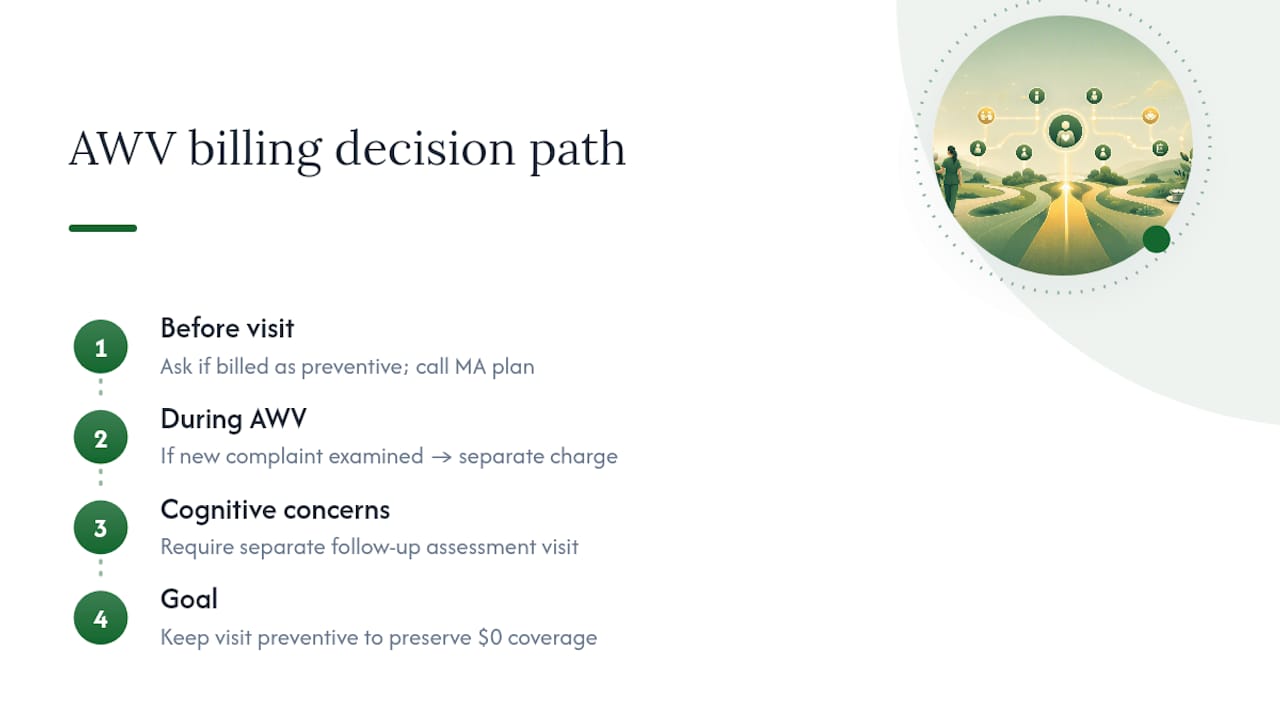
If cognitive concerns surface during the screening, Medicare covers a more thorough follow-up assessment as its own visit. Scheduling that separately protects your wellness visit’s $0 status and gets you a more focused evaluation.
Pro Tip: For Medicare Advantage enrollees, call your plan before the appointment to confirm your provider is in-network for the AWV specifically. Some plans handle preventive visits differently than they handle regular office visits.
Why Your Wellness Visit Should Shape Your Coverage Decisions
Your wellness visit produces something valuable beyond the conversation itself: a screening checklist and possible referrals that tell you what your coverage actually needs to handle this year. If your provider flags a fall risk, that’s a signal to check whether your plan covers physical therapy or home safety equipment. A new referral means checking your specialist network.
We’ve found the smartest move is scheduling an annual coverage review shortly after your AWV, while the recommendations are fresh. If you’re unsure how your results should influence a Medicare Advantage, Medigap, or Part D decision, we’re glad to help you sort through it.
— Zach
Turn Your Wellness Visit Results Into a Coverage Plan
Your wellness visit gives you a prevention plan on paper. Turning that into the right coverage, one that actually pays for the screenings and follow-ups your provider recommended, is where Greenins comes in.

Green Insurance Agency helps Northeast Florida beneficiaries in Orange Park, Fleming Island, and Jacksonville compare Medicare Advantage, Medigap, and Part D options against what their AWV actually recommended. If your visit flagged a fall risk, we’ll check whether your plan covers services like fall-prevention programs. If it flagged a bone-density concern, we’ll look at whether your plan covers routine screening frequency your doctor suggested. Our certified Medicare Insurance Planners® don’t work off a script. They sit down with your actual results and your actual plan.
Schedule a no-cost consultation through our Medicare plan review and find out whether your current coverage matches what your last wellness visit uncovered.
Where to Verify the Official Rules
For the exact coverage rules, check Medicare.gov’s wellness visit page and CMS’s Medicare Wellness Visits guidance. The printable preventive services guide is worth keeping on hand, and AARP’s beneficiary explainer offers plain-language answers to common questions.
This article is general information, not a substitute for advice from a qualified doctor. Consult a qualified healthcare professional about your own circumstances before acting on anything here.