


Yes. Medicare Part A covers hospice care for beneficiaries who qualify and choose to elect the benefit, and most services come at little to no cost when delivered through a Medicare-approved hospice. That coverage isn’t unconditional, though, and a few dollars and cents matter more than most families expect.
- Medicare Part A pays for hospice once you’re certified terminally ill and sign the election statement.
- Nearly all hospice-related services are covered when your chosen hospice provides or arranges them.
- You may still owe up to $5 for each outpatient prescription used for pain and symptom control, plus 5% coinsurance for inpatient respite stays.
Key Takeaways
Medicare Part A covers hospice care for terminally ill beneficiaries who elect the benefit, with patient costs limited mainly to a $5 drug copay and 5% respite coinsurance.
| Point | Details |
|---|---|
| Coverage basics | Medicare Part A pays for hospice once a physician certifies a life expectancy of six months or less and you sign the election statement. |
| Costs stay low | Expect up to a $5 copay per symptom-control prescription and 5% coinsurance for inpatient respite stays, with no hospice deductible. |
| Four care levels | Routine home care, continuous home care, general inpatient care, and inpatient respite care each apply to different situations and payment rates. |
| Medicare Advantage stays out of it | Original Medicare pays for hospice even if you have an MA plan, though your plan must help you find approved hospices. |
| Get personalized help | Greenins offers free consultations to help families coordinate hospice benefits with Part D and Medicare Advantage coverage and handle appeals. |
Table of Contents
- What Medicare Hospice Coverage Actually Pays For
- What Are the Four Levels of Hospice Care?
- Who Qualifies for Medicare Hospice Coverage and How Do You Enroll?
- What Does Hospice Cost Under Medicare?
- How Does Hospice Work With Medicare Advantage?
- What Doesn’t Hospice Cover, and What Are Your Rights?
- How Green Insurance Agency Helps With Hospice and Medicare Questions
- Hospice Decisions Aren’t as Final as They Feel
- Get Help Coordinating Medicare Hospice Coverage
- Where to Verify These Hospice Coverage Rules
- Sources
What Medicare Hospice Coverage Actually Pays For
Medicare hospice coverage is built around comfort, not cure. Once you elect the benefit, Medicare pays your hospice a daily rate to manage the physical, emotional, and spiritual toll of a terminal illness, not to treat it. That distinction shapes everything else about how hospice benefits work.
The services covered under 42 CFR § 418.202 are broader than most people assume. Here’s what’s typically included:
- Physician and nursing care focused on comfort and symptom relief.
- Medical equipment and supplies, such as hospital beds and wheelchairs.
- Prescription drugs for pain and symptom management.
- Medical social services and counseling for the patient and family.
- Physical, occupational, and speech therapy when it supports comfort or function.
- Home health aide and homemaker services.
- Short-term inpatient care for pain or symptom crises.
- Grief and bereavement support for the family, continuing after death.
None of this happens on autopilot. A hospice interdisciplinary group, made up of a physician, nurse, social worker, and chaplain or counselor, builds and regularly updates an individualized plan of care based on your specific symptoms and wishes. That team approach is what separates hospice from a standard home health referral.
One catch trips up more families than any other: coverage only applies when services come from or are arranged by your Medicare-approved hospice. Call an outside specialist on your own, and Medicare may not pay for it. Always route new services through your hospice team first.
What Are the Four Levels of Hospice Care?
Medicare pays hospices differently depending on how intensive your care needs are at any given moment, and CMS defines four distinct levels that determine both the care you get and what the hospice bills per day.
- Routine home care: the default level for most patients, delivered wherever you live, whether that’s your own home or a nursing facility.
- Continuous home care: short-term, around-the-clock nursing during a symptom crisis, typically lasting only a day or two until things stabilize.
- General inpatient care: hospital or hospice-facility level care when pain or symptoms can’t be managed safely at home.
- Inpatient respite care: up to five consecutive days in a facility so a family caregiver can rest, travel, or simply recover.
Most patients spend the overwhelming majority of their time in routine home care. The other three levels exist for specific, temporary situations, and switching between them is common as needs change week to week. Each level carries its own per-diem payment rate, which is why your hospice team documents care level shifts carefully.
Who Qualifies for Medicare Hospice Coverage and How Do You Enroll?
Qualifying comes down to three requirements, and all three have to be met before hospice coverage begins.
- You have Medicare Part A.
- Your hospice medical director and your attending physician both certify you’re terminally ill with a life expectancy of six months or less if the illness runs its normal course.
- You sign an election statement (the Notice of Election) choosing hospice care over Medicare’s standard treatment coverage for that illness.
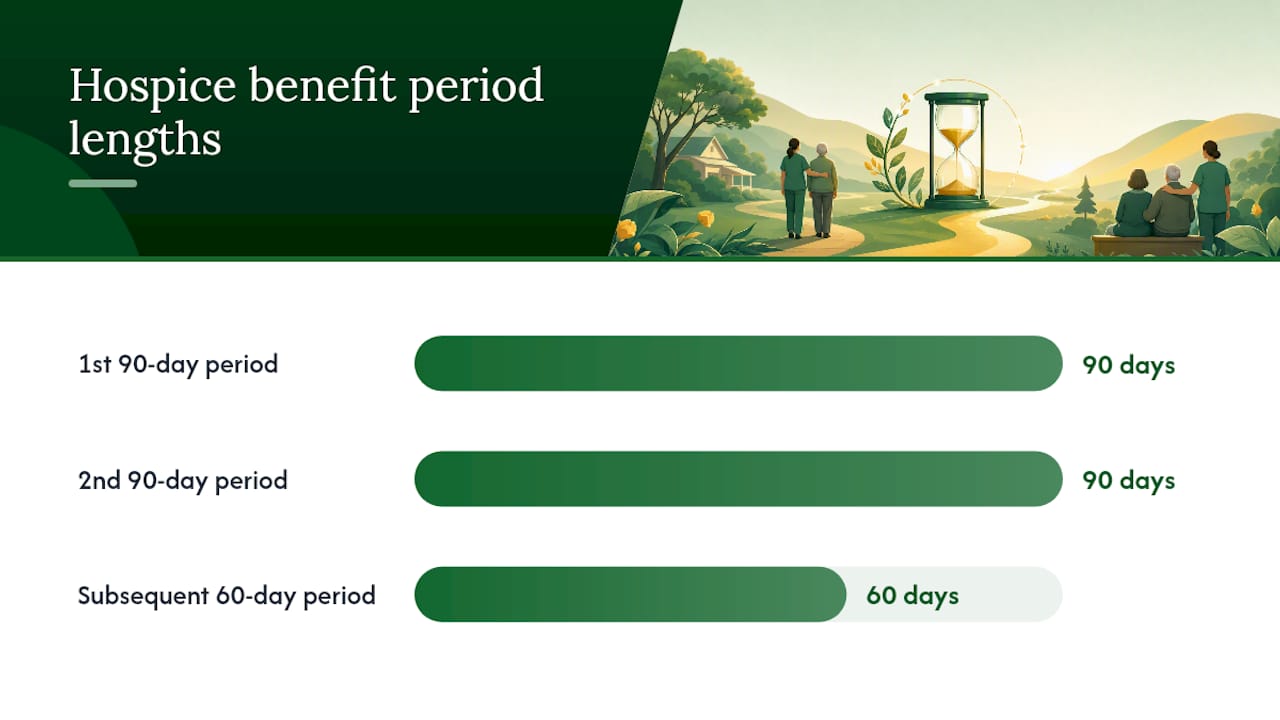
From there, benefit periods structure everything. You get two 90-day periods first, followed by an unlimited number of 60-day periods, and recertification is required at the start of each one. Periods beyond the initial 180 days require a face-to-face visit with a hospice physician or nurse practitioner to confirm you still qualify.
You’re never locked in. You can revoke hospice at any point, return to standard Medicare treatment, and re-elect hospice later if you’re still eligible.
Pro Tip: Ask your hospice for a copy of your signed election statement and keep it with your other medical documents. If you ever switch hospices or have a coverage dispute, that paperwork is the first thing anyone will ask for.
What Does Hospice Cost Under Medicare?
Medicare pays hospices directly, and there’s no deductible standing between you and the benefit. You’re still responsible for your regular Part A and Part B premiums, but the hospice-specific costs are narrow.
- Up to $5 per prescription for drugs related to pain and symptom control.
- 5% coinsurance on the Medicare-approved amount for inpatient respite care.
- Possible room and board charges if you’re in a nursing facility for non-respite reasons.
The $5 copay and 5% respite coinsurance are about as low as Medicare cost-sharing gets. The real financial trap is different: if you or a family member arranges a hospital stay without going through your hospice first, you could face the full bill instead of a modest coinsurance charge. Always confirm inpatient arrangements with your hospice team in writing before you go.
How Does Hospice Work With Medicare Advantage?
Here’s a detail that surprises a lot of Medicare Advantage enrollees: once you elect hospice, Original Medicare pays for it, not your MA plan. Your Advantage plan keeps covering anything unrelated to your terminal illness, but hospice itself shifts to Original Medicare automatically.
Your MA plan still has a job to do, though. It must help you locate a Medicare-approved hospice in your area rather than leaving you to search alone.
- Search Medicare.gov Care Compare by ZIP code to see approved hospices near you.
- Call 1-800-MEDICARE for help comparing options.
- Ask any hospice directly for its Medicare provider number before enrolling.
Pro Tip: When you interview a hospice, ask specifically how they handle after-hours symptom crises and how they arrange inpatient stays. The answer to that one question tells you more about quality than almost anything else on their brochure.
What Doesn’t Hospice Cover, and What Are Your Rights?
Hospice coverage has real limits, and knowing them upfront prevents surprise bills later.
- Curative treatments for your terminal illness are excluded once you elect hospice, since the benefit is built around comfort care.
- Services from providers your hospice didn’t arrange typically aren’t covered.
- Room and board isn’t covered unless it’s part of an arranged inpatient or respite stay.
You have real protections built into the Medicare hospice benefit, including a one-time consultation with a hospice medical director before you even elect the benefit, so you can ask questions without committing. You can revoke your election anytime, switch hospices, and appeal denied claims through 1-800-MEDICARE or your local State Health Insurance Assistance Program (SHIP).
If you’re facing this decision now, talk to your attending physician about a hospice consultation, and write down your care preferences before you need them.
How Green Insurance Agency Helps With Hospice and Medicare Questions
Sorting out how hospice interacts with your Part A, Part D, or Medicare Advantage plan isn’t something you should have to figure out alone. Our certified Medicare Insurance Planners® at Greenins, backed by 625+ client reviews and recognition as the top-rated agency in Clay County, FL, help families locate Medicare-approved hospices, understand cost-sharing, and navigate appeals when something doesn’t go as expected.
Hospice Decisions Aren’t as Final as They Feel
Families often treat the hospice decision like a door that only swings one way. It doesn’t. You can revoke the election, return to curative treatment, and elect hospice again later if your situation still qualifies. That flexibility matters more than most explainer articles let on.
Bring your family into the conversation early, and put your preferences in writing before a crisis forces the decision. The steps in this article, from checking eligibility to interviewing a hospice about inpatient arrangements, work best when you’ve already thought them through.
— Zach
Get Help Coordinating Medicare Hospice Coverage
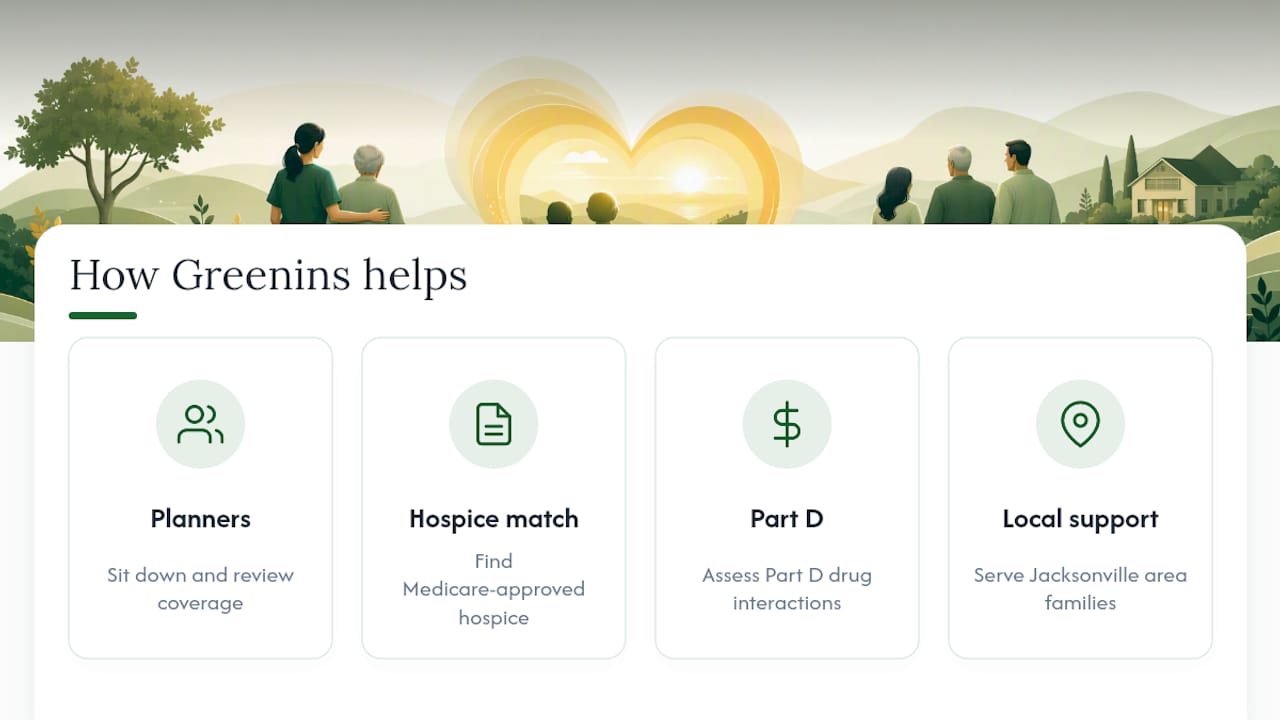
Working out how hospice fits with your Part A, Part D, or Medicare Advantage plan takes more than a government pamphlet. Greenins is the alternative to piecing this together alone or through a call center: our certified Medicare Insurance Planners® sit down with you, review your actual coverage, and help you find a Medicare-approved hospice without the runaround.

A free consultation with Greenins covers exactly the gaps this article can’t close for your specific situation: how your Part D drug costs interact with hospice symptom-control prescriptions, whether your Medicare Advantage plan is doing its job pointing you to approved hospices, and what to do if a claim gets denied. We’ve supported Jacksonville, Orange Park, and Fleming Island area families through these decisions long after the initial enrollment, and that support doesn’t end once paperwork is signed.
If you or a family member need to sort out hospice coverage now, schedule a consultation with Greenins and get answers before a crisis forces the decision.
Where to Verify These Hospice Coverage Rules
For the official word on anything covered here, go straight to the source.
- Medicare for eligibility, costs, and benefit periods.
- The Medicare Hospice Benefits publication for a plain-language overview and patient rights.
- CMS’s hospice payment and regulations page and Benefit Policy Manual Chapter 9 for certification and billing detail.
This article is general information, not a substitute for advice from a qualified doctor. Consult a qualified healthcare professional about your own circumstances before acting on anything here.