


Yes, Medicare Part B covers Leqembi for eligible patients, but only under specific conditions. Coverage kicked in after the FDA granted the drug traditional approval, and it depends on a documented Alzheimer’s diagnosis, confirmed amyloid plaque, and your clinician’s participation in a CMS registry. Once those boxes are checked, standard Part B cost-sharing applies, which usually means a 20% coinsurance bill unless you have supplemental coverage.
TL;DR:
- Patients must have a documented early-stage Alzheimer’s diagnosis and confirmed amyloid plaque evidence before Medicare covers Leqembi infusion.
- Clinicians need to participate in a CMS registry, which requires brief, HIPAA-compliant data submissions to qualify for Medicare Part B reimbursement.
- The typical out-of-pocket cost for each infusion is 20% of the Medicare-approved amount, with additional MRI monitoring expenses that can substantially increase total costs.
- Medicare Advantage plans may have different coverage and prior authorization requirements, requiring patients to verify in-network providers and plan-specific rules.
- Securing written cost estimates in advance and consulting a Medicare insurance planner can help patients accurately budget for the full treatment and monitoring expenses.
Table of Contents
- Leqembi Medicare Coverage: What Part B Actually Pays For
- Leqembi Eligibility Criteria: Who Actually Qualifies
- Leqembi Copayment Information: What You’ll Actually Owe
- Leqembi Insurance Options Through Medicare Advantage and Part D
- How to Access Leqembi: A Step-by-Step Checklist
- How Greenins Helps You Plan Around Leqembi’s Real Costs
- An Editorial Take on Getting Leqembi Covered Without Guessing
- Get a Free Medicare Cost Estimate for Leqembi Treatment
- Sources
Leqembi Medicare Coverage: What Part B Actually Pays For
Medicare Part B covers outpatient infusion drugs administered in a clinical setting, and Leqembi falls squarely into that category as an IV-administered monoclonal antibody. This is the core of Leqembi Medicare coverage: it’s billed under the medical benefit, not a retail pharmacy plan, because a clinician has to give the infusion in a controlled setting.
The path to that coverage started with a regulatory shift. When the FDA converted Leqembi to traditional approval in 2023, it triggered a much broader coverage decision from the Centers for Medicare & Medicaid Services. Before that conversion, coverage was narrow and mostly limited to clinical trial participants. After it, CMS announced broader Medicare coverage of Leqembi, opening the door to a much larger group of beneficiaries.
That broader access comes with a catch: your treating clinician has to participate in a qualifying CMS registry. This isn’t red tape for its own sake. It’s how CMS collects real-world data on how Leqembi performs outside of controlled trials, tracking safety signals and effectiveness across a much wider patient population than the original studies covered.
Here’s what makes this workable for clinicians and patients alike: the registry submissions are designed to be brief. Clinicians submit short entries, and CMS has stated these are HIPAA-compliant and low-burden by design, so your privacy isn’t put at extra risk just because your provider is contributing data.
What this means in practice:
- Medicare and Leqembi coverage is real, but it flows through a specific administrative channel, not automatic drug coverage.
- Your provider must be registry-enrolled before your first infusion is billed to Part B.
- The registry exists to refine future coverage and safety guidance, so it’s a two-way arrangement between patients gaining access and CMS gathering evidence.
Leqembi Eligibility Criteria: Who Actually Qualifies
Leqembi eligibility criteria come down to two things: your diagnosis and your documentation. Medicare requires clear evidence you’re in the early stages of the disease, not moderate or advanced Alzheimer’s, and that amyloid plaque has actually been confirmed rather than assumed.
- Diagnosis stage. You need a documented diagnosis of mild cognitive impairment due to Alzheimer’s or mild Alzheimer’s dementia. This drug isn’t approved or covered for later-stage disease.
- Amyloid confirmation. You need objective evidence of beta-amyloid plaque in the brain, typically from a PET scan or a cerebrospinal fluid biomarker test. A clinical impression alone won’t satisfy this requirement.
- Clinician registry status. Your treating provider has to be actively enrolled in the CMS registry and committed to ongoing follow-up care, including the safety monitoring Leqembi requires.
- Confirm before you commit. Ask your neurologist’s office directly whether they’re registry-participating before scheduling infusions. If they’ve opted out, ask for a referral to a center that participates.
Pro Tip: Request copies of your PET scan or CSF biomarker report before your next appointment. Having these documents in hand, rather than waiting on records requests between offices, speeds up prior authorization and avoids paying for a repeat scan you didn’t actually need.
Leqembi Copayment Information: What You’ll Actually Owe
Here’s the number that matters most: after you meet your annual Part B deductible, standard cost-sharing sets your coinsurance at 20% of the Medicare-approved amount for the infusion itself. That’s the baseline Leqembi copayment information every patient and caregiver should know before starting treatment.
But the infusion cost is only part of the bill. Leqembi requires regular MRI scans to monitor for ARIA, a swelling or bleeding side effect that shows up in a meaningful share of patients. These scans are billed separately from the drug itself, and that imaging and monitoring can add substantial out-of-pocket cost on top of the 20% coinsurance you’re already paying for each infusion.
A few ways your actual bill can look different from the baseline:
- With a Medigap policy: Many Medicare Supplement plans cover some or all of that 20% coinsurance, which can turn a recurring expense into little or nothing out of pocket.
- With employer or VA coverage: Secondary coverage through a former employer or the VA can similarly offset what Part B leaves you owing.
- With no secondary coverage: You’re exposed to the full 20% on every infusion plus the separate cost of each monitoring MRI, which adds up over a year of biweekly treatment.
Before your first infusion, ask both your provider’s billing office and your insurer for a written cost estimate that includes the expected number of MRIs over the coming year. Recurring imaging frequency matters more to your annual budget than the sticker price of the drug itself.
Leqembi Insurance Options Through Medicare Advantage and Part D
Medicare Advantage plans don’t automatically mirror traditional Part B rules. MA organizations can set their own prior authorization, network, and cost-sharing requirements for infused drugs like Leqembi, which means your plan’s fine print matters just as much as CMS policy.
If your case doesn’t meet strict Part B criteria, that’s not necessarily the end of the road. Part D plans may offer alternative coverage for related medications depending on your specific plan’s formulary, though this varies widely by carrier.
If you’re on Medicare Advantage, take these steps before assuming anything about your coverage:
- Call member services and ask directly whether Leqembi is covered under your plan and what prior authorization looks like.
- Request a written estimate of your expected patient responsibility, not a verbal ballpark.
- Confirm which infusion centers are in-network, since going out-of-network can spike your costs even when the drug itself is covered.
Network choice matters more here than with many other treatments, since infusion facilities and the neurologists who order the required scans aren’t interchangeable across every plan’s network.
How to Access Leqembi: A Step-by-Step Checklist
Getting from “I think I might be eligible” to your first covered infusion takes some legwork. Here’s the order that actually works.
- Confirm your Medicare enrollment status. Know whether you’re on Original Medicare, a Medicare Advantage plan, and whether you carry a Medigap policy, since each changes your cost exposure.
- Gather your diagnostic records. Pull your PET scan or CSF biomarker results and your cognitive assessment showing mild cognitive impairment or mild dementia.
- Verify your clinician’s registry status. Ask the practice directly, in writing if possible, whether they’re enrolled in the CMS registry required for coverage.
- Request written cost estimates. Get itemized figures for the infusion coinsurance and expected MRI monitoring costs before you schedule anything.
- Contact your MA plan if applicable. Confirm prior authorization requirements and in-network facility options before your first appointment.
Bring a short list of questions to that first appointment: Is my provider registry-enrolled? How many MRIs will I need in the first year? What’s my estimated annual out-of-pocket cost? For Part D-related questions, your insurer’s member services line can tell you exactly what your formulary covers.
Pro Tip: Ask for every cost estimate in writing and keep a simple log of every call you make to your insurer or provider’s office, including dates and names. If a claim gets denied later, that paper trail is often what makes an appeal succeed.
How Greenins Helps You Plan Around Leqembi’s Real Costs
Understanding Leqembi reimbursement on paper is one thing. Figuring out what it actually means for your monthly budget is another. That’s where a certified Medicare Insurance Planner® at Greenins comes in, working through your specific plan details rather than general averages.
Green Insurance Agency’s consultations cover plan comparison across Medicare Advantage, Supplement, and Part D options, along with claims support and appeals help if a Leqembi-related claim gets denied. Annual coverage reviews matter here too, since your Medigap or MA plan’s cost-sharing for treatments like this can shift year to year.
Translating a 20% Part B coinsurance exposure into a real number, factoring in your expected MRI frequency and whether Medigap offsets it, is exactly the kind of budgeting work a planner is built to do before you commit to treatment.
An Editorial Take on Getting Leqembi Covered Without Guessing
The conventional advice on Medicare benefits for Leqembi stops at “yes, it’s covered,” and that’s where most patients and caregivers get burned. Coverage existing and coverage being affordable are two different things, and the gap between them is the MRI monitoring schedule almost nobody budgets for upfront.
What the research actually supports is this: the drug’s coinsurance is predictable and calculable ahead of time, but the imaging costs are the variable that catches families off guard because they’re billed separately and recur throughout treatment. Prioritize getting a full-year cost projection, infusions plus scans, before you commit to a treatment schedule, not after the first bill arrives.
The registry requirement gets treated as a bureaucratic hurdle in most coverage, but it’s worth reframing. It’s the mechanism keeping this coverage in place at all, and it’s low burden on your clinician by design. Don’t let a provider’s unfamiliarity with the registry become your problem. Ask early, and switch providers if you have to.
— Zach
Get a Free Medicare Cost Estimate for Leqembi Treatment
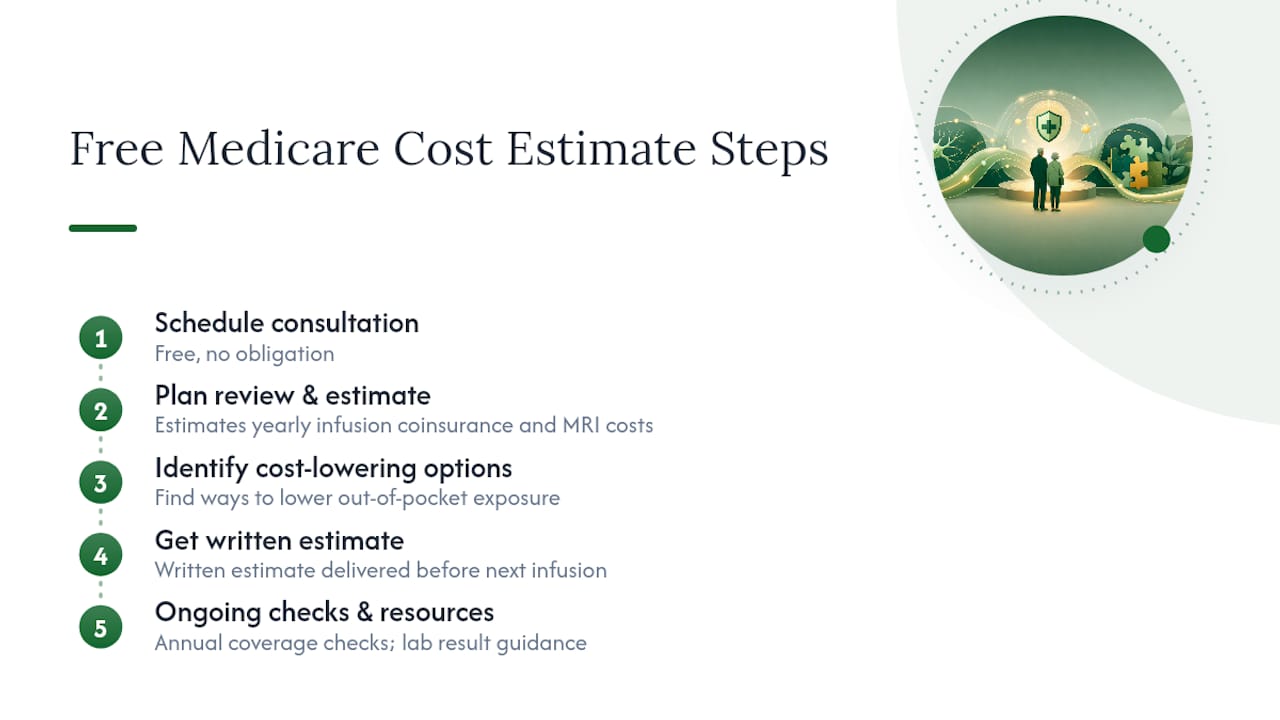
Professional consultation services can help you understand your Leqembi bill months into treatment. A consultation can walk through your current plan details and estimate what your infusion coinsurance and MRI monitoring costs will actually look like over a full year.
These consultations typically have no obligation or sales pressure. Potential options that may lower your out-of-pocket exposure during treatment can be identified during the review, along with ongoing support for annual coverage checks as plan rules change. For patients also managing lab work and monitoring alongside Leqembi treatment, resources like PRYM Wellness’s guide to interpreting lab results online can help you make sense of clinician-backed reports between appointments.
Ready to see your real numbers? Schedule your free consultation with Greenins today and get a written estimate before your next infusion is even scheduled.
This article is general information, not a substitute for advice from a qualified doctor. Consult a qualified healthcare professional about your own circumstances before acting on anything here.