


Yes, Medicare covers medically necessary cancer treatment, but which part pays depends entirely on the service and where you receive it. Expect Part A to handle inpatient stays and Part B to cover most of outpatient chemotherapy and radiation after your deductible, leaving you responsible for the remaining coinsurance. Part D and Medicare Advantage rules can shift those numbers further. Before treatment starts, confirm your provider’s network status, your drug’s formulary tier, and any required prior authorization.
TL;DR:
- Medicare covers inpatient surgery and radiation under Part A, while outpatient chemotherapy and radiation are covered by Part B, with costs depending on setting and billing status.
- Prescription oral chemotherapy drugs are usually covered by Part D, but costs vary greatly depending on formulary tier and prior authorization requirements.
- Preventing unexpected bills requires verifying provider acceptance, inpatient versus outpatient billing status, drug formulary details, and obtaining documentation before treatment begins.
- A Medicare Advantage plan often necessitates in-network care and prior authorization, which could differ from Original Medicare coverage for the same treatments.
- Regular, proactive verification of coverage for each new treatment phase can prevent costly surprises during active cancer treatment.
Table of Contents
- Which Medicare Part Pays for Cancer Treatment
- What Cancer Treatments and Services Medicare Actually Covers
- What Cancer Care Costs You Under Medicare
- How to Confirm Your Cancer Care Is Covered Before Treatment Starts
- What to Do If Medicare Denies Your Cancer Treatment Coverage
- When a Certified Medicare Planner Makes the Difference
- Why Verification Beats Assumption in Cancer Care
- Get Hands-On Help Navigating Cancer Coverage With Greenins
- Sources
Which Medicare Part Pays for Cancer Treatment
Cancer care rarely comes from a single Medicare “bucket.” A single treatment plan can pull from three or four parts depending on where you sit, what drug you take, and how it’s administered. Getting this wrong is one of the most common reasons families end up staring at a bill they didn’t expect.

Part A handles inpatient hospital care, including surgery that requires an overnight admission, inpatient radiation, hospice, and certain costs tied to inpatient clinical trials.
Part B covers most of what happens outside a hospital bed: chemotherapy administered by IV or infusion in a clinic, outpatient radiation, physician visits, diagnostic imaging like CT and PET scans, durable medical equipment, and drugs given in a clinical setting rather than taken home. The Medicare spells this out clearly, and it’s worth bookmarking.
Part D picks up prescription drugs taken at home, including many oral chemotherapy pills and anti-nausea medications. Coverage here depends entirely on your specific plan’s formulary and how that drug is tiered.
Part C (Medicare Advantage) bundles Part A and Part B, often with Part D folded in, but it usually requires you to stay in-network and may add prior authorization steps that Original Medicare doesn’t. Advantage plans are required to match Original Medicare’s baseline benefits, but the rules for accessing them vary by carrier, according to guidance from North Carolina’s Medicare and seniors’ health insurance program.
What Cancer Treatments and Services Medicare Actually Covers
Medicare’s coverage extends further than most people assume, covering surgery, radiation, chemotherapy, targeted therapy, immunotherapy, and supportive services like mental health and nutrition counseling. Where things get complicated is the fine print around timing and setting.
- Chemotherapy: IV and infusion chemo generally falls under Part B; oral chemo pills typically fall under Part D, and the cost difference between those two can be dramatic depending on your plan.
- Supportive medications: Anti-nausea drugs are covered under Part B only if administered by your provider within 48 hours of chemotherapy. Take the same drug home as a pill later, and it likely shifts to Part D coverage instead, with a different cost structure entirely.
- Radiation: Inpatient radiation bills under Part A; outpatient radiation bills under Part B. The setting changes which deductible applies.
- Surgery and inpatient stays: Part A covers admitted inpatient surgery, but “observation status” is technically outpatient even if you sleep in a hospital bed overnight. That distinction alone can add hundreds of dollars to your bill.
- Diagnostics and equipment: Imaging, pathology, lab work, and durable medical equipment are generally covered, but subject to medical necessity documentation.
- Clinical trials: Medicare covers routine costs associated with qualifying clinical trials, though documentation requirements differ for inpatient versus outpatient trial participation.
Pro Tip: If a hospital tells you that you’re “under observation,” ask directly whether that counts as inpatient or outpatient for billing. That one question can save you from a surprise Part A deductible you thought you’d already covered.
What Cancer Care Costs You Under Medicare
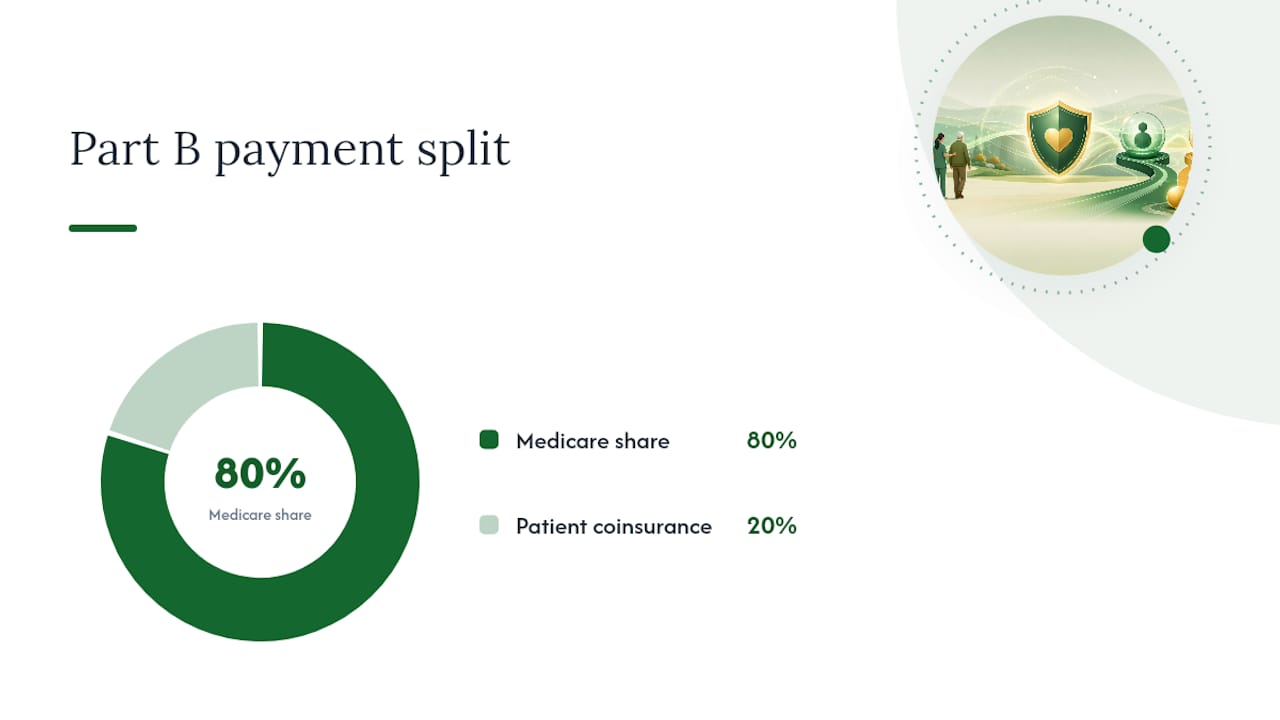
Original Medicare doesn’t work like a flat co-pay plan. For most outpatient services, including chemo infusions and outpatient radiation, you pay a coinsurance portion of the Medicare-approved amount once you’ve met your annual deductible. In 2025, that Part B deductible sat at $257, after which Medicare pays roughly 80% of approved treatment costs and you’re on the hook for the rest. There’s no annual out-of-pocket cap under Original Medicare, which is exactly why that 20% coinsurance adds up fast for anyone in active cancer treatment.
Part A carries its own inpatient hospital deductible, charged per benefit period rather than per calendar year, so a hospital stay for surgery could trigger it separately from any outpatient costs you’ve already paid.
A few ways beneficiaries manage this exposure:
- Medigap (Medicare Supplement) plans can cover some or all of that 20% coinsurance and the Part A deductible, which is why many cancer patients on Original Medicare carry one. Note that Medigap generally isn’t available once you’ve enrolled in most Medicare Advantage plans.
- Part D formulary tiers determine what you pay for oral chemo. A drug on a specialty tier can cost far more out of pocket than the same drug class on a lower tier, so checking your plan’s formulary before filling a prescription matters.
- Medicare Savings Programs and Extra Help are income-based programs that can reduce or eliminate premiums, deductibles, and copays for beneficiaries who qualify, according to Medicare’s cost overview.
How to Confirm Your Cancer Care Is Covered Before Treatment Starts
A little verification work upfront beats a denied claim after the fact. Run through this before your first infusion, surgery date, or radiation session:
- Call the provider’s billing office to confirm they accept Medicare assignment (for Original Medicare) or that they’re in-network for your specific Advantage plan.
- Check your Part D formulary for every prescribed drug, including whether prior authorization or step therapy applies.
- Ask whether the procedure will be billed as inpatient or outpatient. Observation status changes which part pays and what you owe.
- Request a second opinion before major surgery. Medicare typically covers second opinions for surgical decisions, and the American Cancer Society recommends this as standard practice for cancer diagnoses.
- Document every pre-approval, including authorization numbers, staff names, and call dates, in case you need to appeal later.
| Verification step | Why it matters |
|---|---|
| Confirm provider accepts Medicare assignment | Prevents balance billing above approved amounts |
| Check drug formulary tier and prior auth | Avoids delays and unexpected specialty-tier costs |
| Ask inpatient vs. outpatient status | Determines which deductible and Medicare part applies |
| Get second opinion documentation | Supports appeals if surgery coverage is later questioned |
| Save authorization numbers and dates | Speeds up any future appeal |
What to Do If Medicare Denies Your Cancer Treatment Coverage
A denial isn’t the end of the road. Medicare’s appeals process has multiple levels, starting with a redetermination request and escalating through an administrative law judge hearing if needed. File as soon as you get the denial notice. Waiting costs you time you may not have.
Gather these before you file:
- Medical records tied to the denied service
- A letter of medical necessity from your treating physician
- Copies of the original prior authorization request and denial notice
When treatment timing is urgent, request an expedited review. Free help is available through your State Health Insurance Assistance Program (SHIP), by calling 1-800-MEDICARE (1-800-633-4227), or through Medicare.gov’s appeals pages. For building a stronger appeals packet, this patient advocacy guide on challenging insurance denials walks through what documentation reviewers actually want to see.
When a Certified Medicare Planner Makes the Difference
Cancer treatment plans rarely stay simple. A patient on oral chemo, an infused biologic, and three specialists is juggling coverage rules across Part B, Part D, and possibly a Medicare Advantage network all at once. That’s exactly the situation where a certified Medicare Insurance Planner earns their keep, not by selling a plan, but by explaining which one actually fits the treatment you’re facing.
Green Insurance Agency’s certified Medicare Insurance Planners® walk clients through formulary checks, Medigap enrollment windows, and appeals paperwork long after the initial plan selection is done. That ongoing relationship, not a one-time sign-up call, is what separates a real advisor from a call center script.
Green Insurance Agency, based in Orange Park, Florida, has built its reputation on this kind of hands-on follow-through, with more than 625 client reviews and recognition as a top insurance agency in Clay County. Consider reaching out to an agent when:
- You’re managing multiple cancer drugs across different formularies
- You’re coordinating care between several specialists on an Advantage network
- You’re facing high anticipated out-of-pocket costs and want a Medigap comparison
- A claim or prior authorization was just denied and you need help building the appeal
Why Verification Beats Assumption in Cancer Care
Most Medicare guidance treats cancer coverage as a yes-or-no question. It isn’t. The real risk isn’t whether Medicare pays. It almost always does for medically necessary treatment. The real risk is the gap between what a plan covers on paper and what actually gets billed once observation status, drug tiers, and network rules enter the picture.
Conventional advice tells people to “check with Medicare” once, at enrollment. That’s not enough for cancer care, where treatment plans change monthly and a single drug switch can shift you from Part B to Part D coverage with a completely different cost structure. The beneficiaries who avoid surprise bills are the ones who re-verify before every phase of treatment, not just at diagnosis.
If there’s one habit worth building, it’s treating every new prescription, every new specialist, and every hospital admission as its own small verification task. That’s tedious. It’s also the only real defense against a five-figure surprise bill mid treatment.
— Zach
Get Hands-On Help Navigating Cancer Coverage With Greenins
Reading about Part B coinsurance is one thing. Sitting across from someone who will actually pull up your specific drug formulary and tell you what your oral chemo prescription will cost next month is another. Greenins gives Medicare beneficiaries in Northeast Florida that second option, free of charge, because the agency earns its living through carrier commissions rather than consultation fees.

Whether you’re comparing Medigap against a Medicare Advantage plan before a cancer diagnosis complicates things, or you’re already mid-treatment and need someone to walk through a denied prior authorization with you, a certified Medicare Insurance Planner can sit down and map your specific situation instead of handing you a generic brochure. That’s the gap between a call center and a local advisor who remembers your case a year later. If your treatment plan involves multiple drugs, multiple specialists, or a recent denial letter, schedule a consultation with Green Insurance Agency and get a plan comparison built around the coverage you actually need.
This article is general information, not a substitute for advice from a qualified doctor. Consult a qualified healthcare professional about your own circumstances before acting on anything here.