
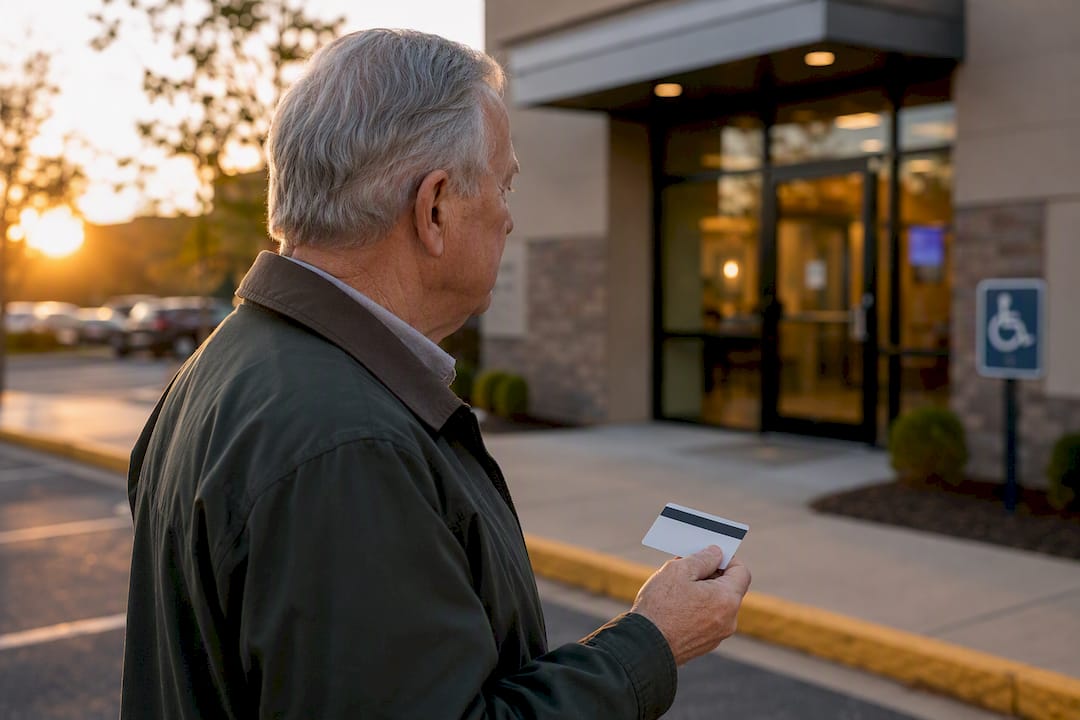
Yes. Medicare Part B covers medically necessary urgent care for a sudden illness or injury that isn’t life threatening. Once you’ve met the 2026 Part B deductible of $283, you’ll typically pay 20% of the Medicare-approved amount for the visit. That’s the baseline every Medicare-eligible adult should know before walking into a clinic.
- Original Medicare (Part B): deductible plus 20% coinsurance applies after you’ve met it.
- Medicare Advantage (Part C): often a flat copay instead, but the amount depends entirely on your plan.
- Your move: check your Summary of Benefits or call your plan before a non-emergency visit if you can.
Fast fact: The 2026 Part B deductible is $283, and the standard coinsurance rate for covered services after that is 20%.
Key Takeaways
Medicare Part B covers medically necessary urgent care after the $283 deductible, with 20% coinsurance typically due afterward, while Medicare Advantage plans usually charge a flat copay that varies by plan.
| Point | Details |
|---|---|
| Part B pays its share | After the $283 deductible, you typically owe 20% coinsurance on the Medicare-approved amount. |
| Advantage plans differ | Medicare Advantage often uses a flat copay instead of coinsurance, but amounts vary by plan. |
| Watch for hospital billing | A clinic billed as hospital outpatient can add a separate facility copay to your visit. |
| Confirm assignment status | Providers who don’t accept assignment may charge up to the limiting charge, generally near 15% above the approved rate. |
| Verify before you go | Use Care Compare or your plan’s directory and call ahead to confirm participation and billing type. |
Table of Contents
- Which Parts of Medicare Cover Urgent Care Visits?
- What Will an Urgent Care Visit Actually Cost You?
- How Do You Confirm an Urgent Care Accepts Medicare?
- Urgent Care or the ER: Which One Do You Need?
- What If the Clinic Doesn’t Accept Medicare?
- When You Need Help Reading Your Bill or Comparing Plans
- Why the Fine Print Matters More Than the Headline Rule
- Sources
Which Parts of Medicare Cover Urgent Care Visits?
Urgent care falls under Original Medicare’s Part B outpatient benefit. Medicare pays its share when the visit meets the urgently needed care standard: a sudden, non-emergency problem that needs prompt attention. A sinus infection, a twisted ankle, a deep but stable cut, a fever that won’t break. These are textbook cases Part B was built for.
Medicare Advantage plans have to cover at least what Original Medicare covers, but they’re free to structure the cost-sharing differently. Most set a flat copay for urgent care instead of the deductible-plus-coinsurance model, and Humana notes that copay amounts vary widely between plans. Some plans also apply network rules that penalize you for going to an out-of-network clinic, even one that technically accepts Medicare.
A few things determine what you’ll actually owe:
- Whether you’re on Original Medicare or a Medicare Advantage plan
- Whether the clinic is in your plan’s network (Advantage only)
- Whether the visit is billed as freestanding urgent care or hospital outpatient
Before you need urgent care, not during a flare-up, pull up your Summary of Benefits or call your plan’s member line and ask what urgent care actually costs you.
What Will an Urgent Care Visit Actually Cost You?
Here’s the math for Original Medicare. Say your urgent care visit is billed at $150 and you haven’t touched your deductible yet this year.
- You pay the first $283 toward your annual Part B deductible (across all Part B services, not just this visit).
- Once that’s met, Medicare pays 80% of the Medicare-approved amount for the visit.
- You pay the remaining 20% coinsurance.
On a $150 visit after your deductible is already met, that’s about $30 out of your pocket. Simple enough. But two wrinkles change the number fast.
First, hospital outpatient billing. If the “urgent care” you visited is actually owned by a hospital and billed through its outpatient department, you may owe a separate facility copay stacked on top of your Part B coinsurance. Same visit, extra line item.
Second, whether your provider accepts assignment. A provider who accepts assignment agrees to charge only the Medicare-approved rate. One who doesn’t accept assignment but hasn’t opted out of Medicare can charge up to the limiting charge, generally capped at 15% above the approved amount. Confirm this before you’re handed a bill, not after.
Medicare Advantage members skip this math entirely in favor of a flat copay, but that copay differs by plan. Look it up before assuming it’s cheap.
How Do You Confirm an Urgent Care Accepts Medicare?
Don’t guess. A quick call before you walk in saves you from disputing a bill later.

Start with Medicare.gov’s Care Compare tool, which lists provider participation status and helps you confirm whether a clinic accepts Medicare before you ever pick up the phone. If you’re on Medicare Advantage, your plan’s provider directory or member portal is the second stop, since network status determines your real cost.
Then call. Ask three questions, in this order:
- “Do you accept Medicare, and do you accept assignment?”
- “Will this visit be billed as freestanding urgent care or hospital outpatient?”
- “Am I in-network under my Medicare Advantage plan, or would this be an out-of-network charge?”
Pro Tip: Screenshot your plan’s provider directory listing or save the front desk staff’s answers in a note on your phone. If you’re getting anything beyond a basic exam, ask for a written cost estimate. That single habit prevents most billing surprises.
Urgent Care or the ER: Which One Do You Need?
Urgent care handles sprains, minor burns, ear infections, sore throats, and small lacerations that need stitches but not surgery. It’s built for problems that are uncomfortable but stable.
The ER is for chest pain, difficulty breathing, uncontrolled bleeding, sudden confusion, or stroke symptoms. These red-flag signs justify calling 911, not driving yourself anywhere.
Costs diverge here too. ER visits get billed under a different category than urgent care, often with a separate hospital emergency copay under Medicare Advantage plans, and generally higher total costs than a routine urgent care visit under Original Medicare’s standard coinsurance. If a symptom feels life threatening, that cost difference should never factor into your decision. Call 911 first and sort out billing later.
What If the Clinic Doesn’t Accept Medicare?
A provider who has formally opted out of Medicare has walked away from the program entirely. Medicare won’t pay anything toward that visit, and you’re on the hook for the full bill under a private contract with that provider. This is different from a provider who simply doesn’t accept assignment but remains in the Medicare system. That second group is still bound by the limiting charge, generally capped near 15% above the Medicare-approved rate, though you should confirm the exact rule applies before assuming it.
If you paid out of pocket at a nonparticipating clinic:
- Get an itemized bill that includes the provider’s NPI number and billing codes.
- Confirm the clinic’s Medicare participation status.
- File a claim directly with Medicare if the provider didn’t bill Medicare for you.
- Appeal or request a written explanation if the reimbursement looks wrong.
Pro Tip: Keep every itemized bill and note until the claim is fully resolved. If the paperwork gets confusing, ask your Medicare plan or a licensed agent to walk through it with you rather than guessing at the codes yourself.
When You Need Help Reading Your Bill or Comparing Plans
Confusing explanation of benefits (EOB) statements and surprise urgent care bills are two of the most common reasons Medicare beneficiaries reach out for help. Greenins works with clients through certified Medicare Insurance Planners® who walk through plan documents line by line, not just at enrollment but for years afterward.
Contact Greenins if you’re staring at an EOB you don’t understand, weighing Medicare Advantage against Original Medicare plus a Medigap policy for how they’d each handle urgent care costs, or need help filing an appeal on a denied claim. Bring your plan name, your most recent EOB, the urgent care bill itself, and any notes from your call-ahead questions to the clinic.
Green Insurance Agency has built its reputation in Clay County, Florida, on more than 625 client reviews and a hands-on, education-first approach that continues long after enrollment day.
Greenins is a local Florida agency, serving Orange Park, Fleming Island, and Jacksonville, that treats plan comparison and claims support as an ongoing relationship rather than a one-time transaction. Visit Greenins to schedule a no-cost consultation.
Why the Fine Print Matters More Than the Headline Rule
The headline rule, that Medicare covers urgent care, is the easy part. What trips people up is everything downstream of that fact: whether the clinic is billed as hospital outpatient, whether the provider accepts assignment, whether your Advantage plan’s copay is $25 or $75 for the exact same visit. Conventional advice stops at “yes, it’s covered” and leaves you to discover the rest on a bill three weeks later.
I’d argue the call-ahead habit matters more than memorizing deductible numbers. Numbers change every year; a five-minute phone call before a non-emergency visit doesn’t. Ask about assignment status and billing type every time, even at a clinic you’ve used before, because ownership and billing arrangements shift.
If you take one thing from this: verify before you’re sick, not after. Save your plan’s member services number in your phone next to 911. And if your EOBs still don’t make sense after a year on Medicare, that’s not a personal failing. That’s a sign to get a second set of eyes on your plan.
— Zach
This article is general information, not a substitute for advice from a qualified doctor. Consult a qualified healthcare professional about your own circumstances before acting on anything here.